

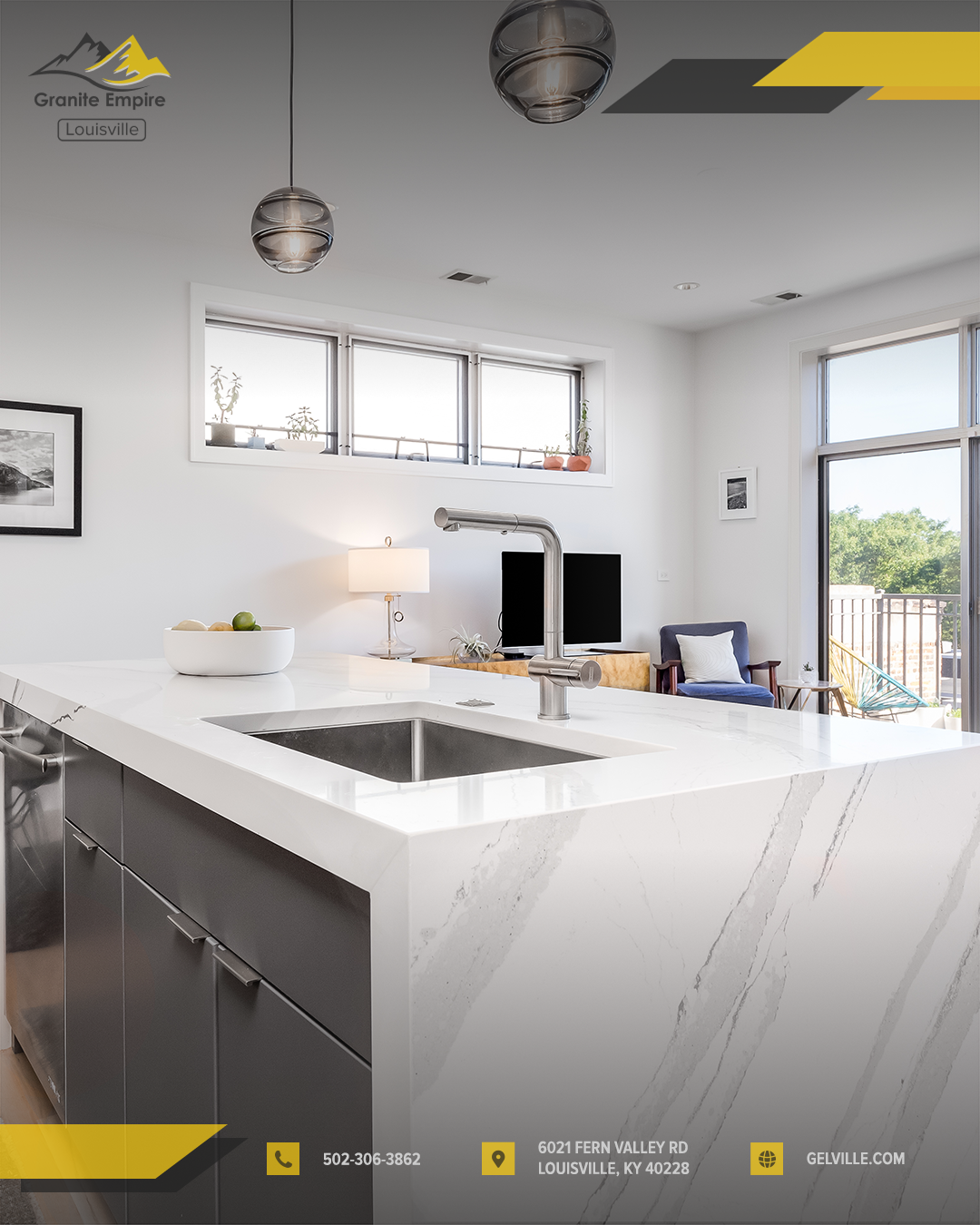
Quartz has earned its reputation the modern way: not through hype, but through daily performance. It’s clean-looking, consistent, and famously low-maintenance. But homeowners don’t choose a countertop to admire it from across the room. They live on it. They drag grocery bags across it. They drop a mug. They set down a hot styling tool in a hurry. And eventually, someone asks the question that sounds simple but isn’t: can quartz actually be repaired?
If you own quartz countertops in Shively, KY, the honest answer is yes—sometimes. The more useful answer is: it depends on the type of damage, the color and finish of your quartz, and how visible you’re willing to tolerate the “after.” Quartz is engineered stone, which makes it incredibly stable, but it also means repairs aren’t the same as they are with natural stone. You can’t just grind and repolish your way back to perfection in every case.
At Granite Empire of Louisville, we’ve seen the full spectrum—from tiny chips that disappear after a professional touch to deep, obvious damage that’s best handled with replacement of a section or a strategic redesign. This guide will tell you what’s actually fixable, what’s not, and how to avoid turning a small issue into a permanent eyesore.
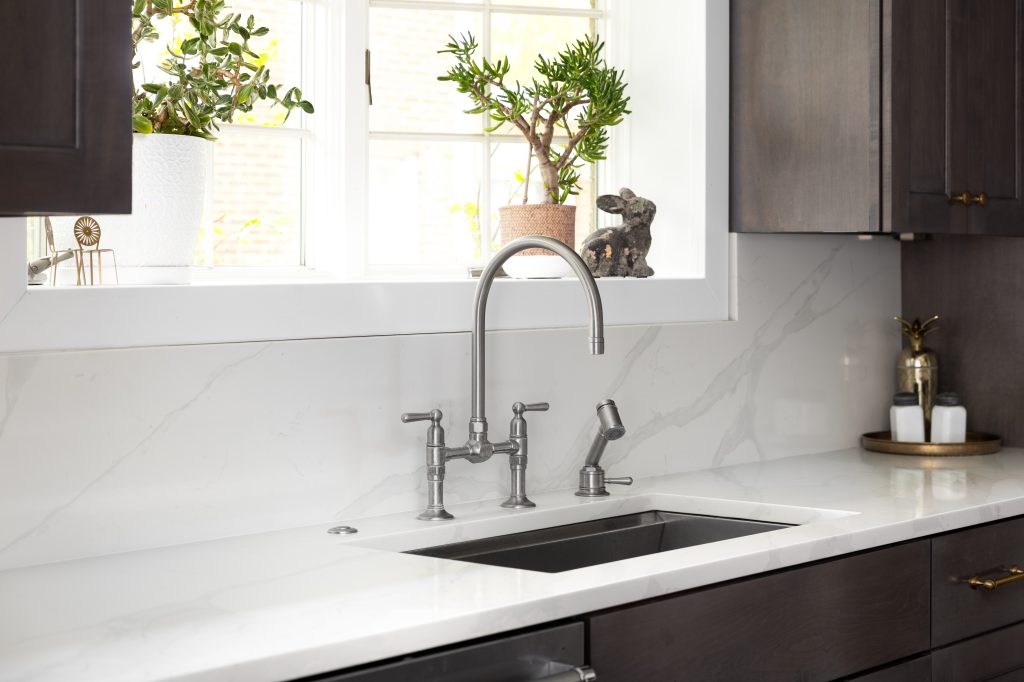
What Quartz Damage Really Looks Like
Before we talk repairs, it helps to understand what quartz is. Quartz countertops are made from ground quartz minerals bound together with resins and pigments. That structure is why quartz is non-porous and generally resistant to staining. It’s also why the surface finish is so consistent.
But those resins that make quartz practical are also why certain types of damage behave differently than they would on granite or quartzite. Heat can affect resins. Certain chemicals can dull the surface. A heavy impact on an edge can chip it, just like any hard surface.
Homeowners with quartz countertops in Shively, KY commonly run into three “damage categories”: chips (usually on edges or corners), scratches (from abrasives or sharp objects), and dull spots or etching-like haze (often from cleaning mistakes). Each category has its own rules.
Chips: The Most Common Repair—and Often the Most Successful
Chips happen in predictable places: sink corners, the front edge near the dishwasher, the corner of an island where people cut through the room too fast. Quartz edges are strong, but the edge is still the most exposed point in the entire installation.
The good news for quartz countertops in Shively, KY is that many chips are repairable with color-matched epoxy or resin fillers, applied by a skilled technician. A quality chip repair focuses on two things: rebuilding the shape and blending the color and reflectivity so the repair doesn’t flash under light.
The best candidates for near-invisible repairs are small chips on lighter, more patterned quartz—especially designs with veining or speckling that naturally disguise a tiny repair line. Solid colors, especially very dark quartz, can be less forgiving because any difference in sheen is easier to notice.
Granite Empire of Louisville typically advises homeowners to treat chip repairs like touch-up paint on a car: a great technician can make it extremely hard to spot, but perfection depends on the color, the location, and the finish.
Scratches: Fixable Sometimes, but Not Always Invisible
Scratches on quartz are tricky because many “scratches” aren’t actually deep. Sometimes what you’re seeing is a transfer mark—metal from a pan, a utensil, or a tool leaving a streak that looks like a scratch. That kind of mark often comes off with the right cleaner and technique.
True scratches—where the surface is physically scored—can sometimes be improved, but the outcome depends on depth and finish. Polished quartz can sometimes be carefully blended and buffed in a localized area, but you have to be cautious: over-buffing can create a shine difference that’s more noticeable than the scratch itself. Matte or honed finishes can be even more sensitive because it’s easier to create an uneven patch.
For quartz countertops in Shively, KY, the rule of thumb is this: if you can feel the scratch with your fingernail, it’s likely deep enough that a DIY fix will make it worse. Professionals can often reduce its visibility, but a totally invisible result is not guaranteed.
Granite Empire of Louisville usually recommends an evaluation before any attempt to sand or polish, because the “quick fix” that works on a YouTube video can leave a permanent dull spot on your countertop.
Dull Spots and Haze: The Repair That’s Really a Reset
One of the most common calls we see is not “I dropped something,” but “My quartz looks cloudy and I don’t know why.” This usually isn’t a structural problem. It’s a surface problem caused by cleaning products, abrasive sponges, or buildup.
Quartz countertops in Shively, KY can lose their crisp shine if homeowners use harsh degreasers, high-alkaline cleaners, bleach-heavy products, or scouring powders. The surface may not be “etched” in the classic marble sense, but it can look hazy, streaky, or dull.
The fix is usually a deep cleaning and surface restoration approach: removing residue, correcting product buildup, and in some cases lightly polishing the affected area. The challenge is that quartz doesn’t respond to polishing the same way natural stones do. You can’t always restore a factory finish perfectly across a spot. What a professional can often do is improve uniformity so the countertop reads clean and consistent again.
If your quartz countertops in Shively, KY have haze, the first step is to stop experimenting with random cleaners. The second step is to identify what caused it, because if the cause remains, the haze will return.
Granite Empire of Louisville often walks homeowners through safer, simpler daily care so they don’t get stuck in the cycle of “cleaning harder” and making the surface look worse.
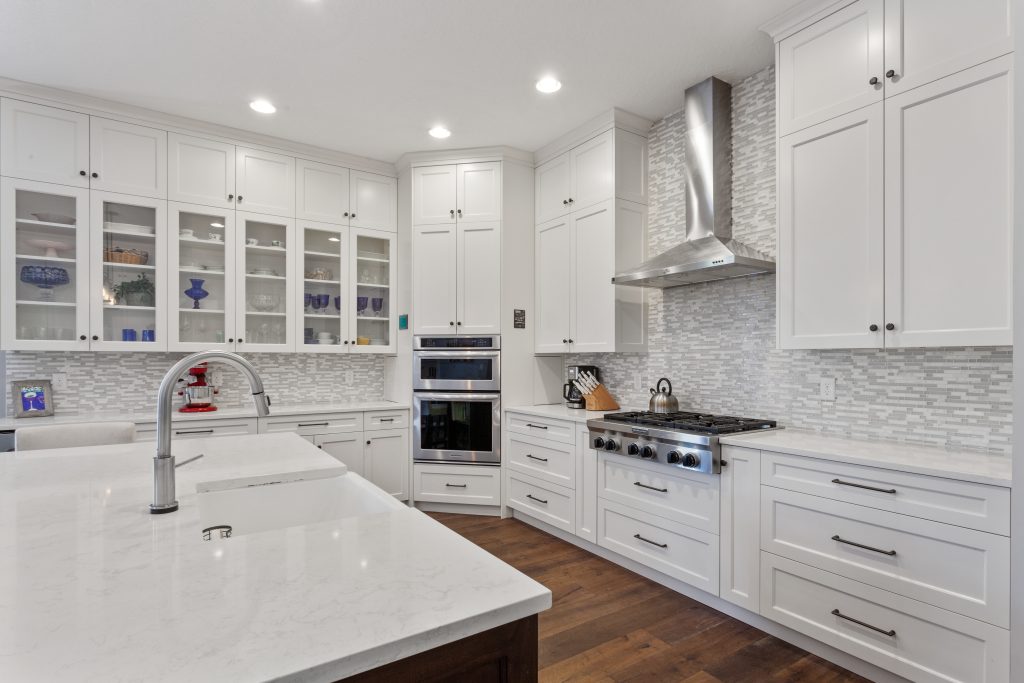
Cracks: The Line Between Repair and Replacement
Cracks are less common than chips, but they’re where decisions get serious. A crack can be caused by extreme impact, poor support underneath, or stress around cutouts—especially if something shifts over time.
Some cracks in quartz countertops in Shively, KY can be stabilized and filled, particularly if they’re hairline and not in a high-stress location. A professional may use specialized adhesives and blending techniques. But cracks that run through a sink cutout area, or cracks that suggest structural issues underneath, often need more than cosmetic work.
If the crack is expanding, if it crosses a seam, or if it’s near a high-use cutout, the best solution may be partial replacement or a redesign that changes the stress point. A good fabricator will talk you through the safest long-term option, not just what looks best today.
Granite Empire of Louisville approaches cracks with a “why first” mindset: fix the cause, not just the symptom.
Burn Marks and Heat Damage: The Repair That Quartz Hates
Here’s the blunt truth: heat damage is one of the hardest things to truly repair on quartz. Because quartz is bound with resins, extreme heat can discolor or weaken the surface. Think hot pan straight from the stove, a heat gun used during a DIY project, or even a hot tool left too long on one spot.
For quartz countertops in Shively, KY, heat damage can show up as yellowing, darkening, or a permanent dull patch. In some cases, the area can be improved cosmetically, but a fully invisible restoration is unlikely if the resin has changed.
This is why prevention is the smartest “repair.” Trivets and heat pads are not old-fashioned; they’re cheap insurance. Granite Empire of Louisville reminds clients that quartz is durable, but “durable” doesn’t mean “immune.”
What You Should Never Do (If You Want Repairs to Stay Small)
When a countertop gets damaged, the instinct is to fix it immediately with whatever is in the cabinet. That’s how small problems become permanent ones.
Avoid abrasive pads and scouring powders. Avoid random solvents unless the product is specifically approved for quartz. Avoid sanding. Avoid magic-eraser style products on glossy quartz unless you’re certain it won’t change the finish. And avoid DIY resin kits unless you’re prepared for a visible patch—because color-matching and sheen-matching is the hardest part.
If you have quartz countertops in Shively, KY and you want the best outcome, document the damage (photos in natural light), stop using the area aggressively, and get a professional opinion. The sooner a chip is repaired, the less likely it is to collect dirt and become more visible.
Granite Empire of Louisville can help you determine whether a repair is worthwhile, what level of invisibility is realistic, and what to do next if replacement makes more sense.
How to Prevent the Most Common Quartz Problems
Prevention isn’t a lecture—it’s the easiest way to keep quartz looking new.
Use cutting boards, even though quartz is scratch-resistant. The board protects both your countertop and your knives. Use trivets for hot items. Use gentle daily cleaning: a soft cloth, warm water, and mild soap is often enough. If you need a stronger cleaner, choose one labeled safe for quartz and follow it exactly. Rinse and dry after cleaning so residue doesn’t build up.
And if you’re choosing quartz countertops in Shively, KY for a busy home, think about the design: edges that aren’t razor-sharp, corners that are slightly softened, and layouts that avoid unnecessary weak points around cutouts.
Granite Empire of Louisville often helps homeowners make these decisions early because good planning reduces the chance you’ll ever need repairs.

Quartz is repairable—but not endlessly, and not always invisibly. Chips are usually the easiest win. Scratches can be improved, depending on depth. Haze is often reversible once you stop using the wrong products. Cracks require smart evaluation. Heat damage is the toughest opponent in the room.
If you want quartz countertops in Shively, KY that stay beautiful for the long run, the best strategy is a mix of smart daily habits and quick professional attention when something goes wrong. Granite Empire of Louisville is here for both: helping you choose quartz that fits real life, and helping you protect the investment after installation.