

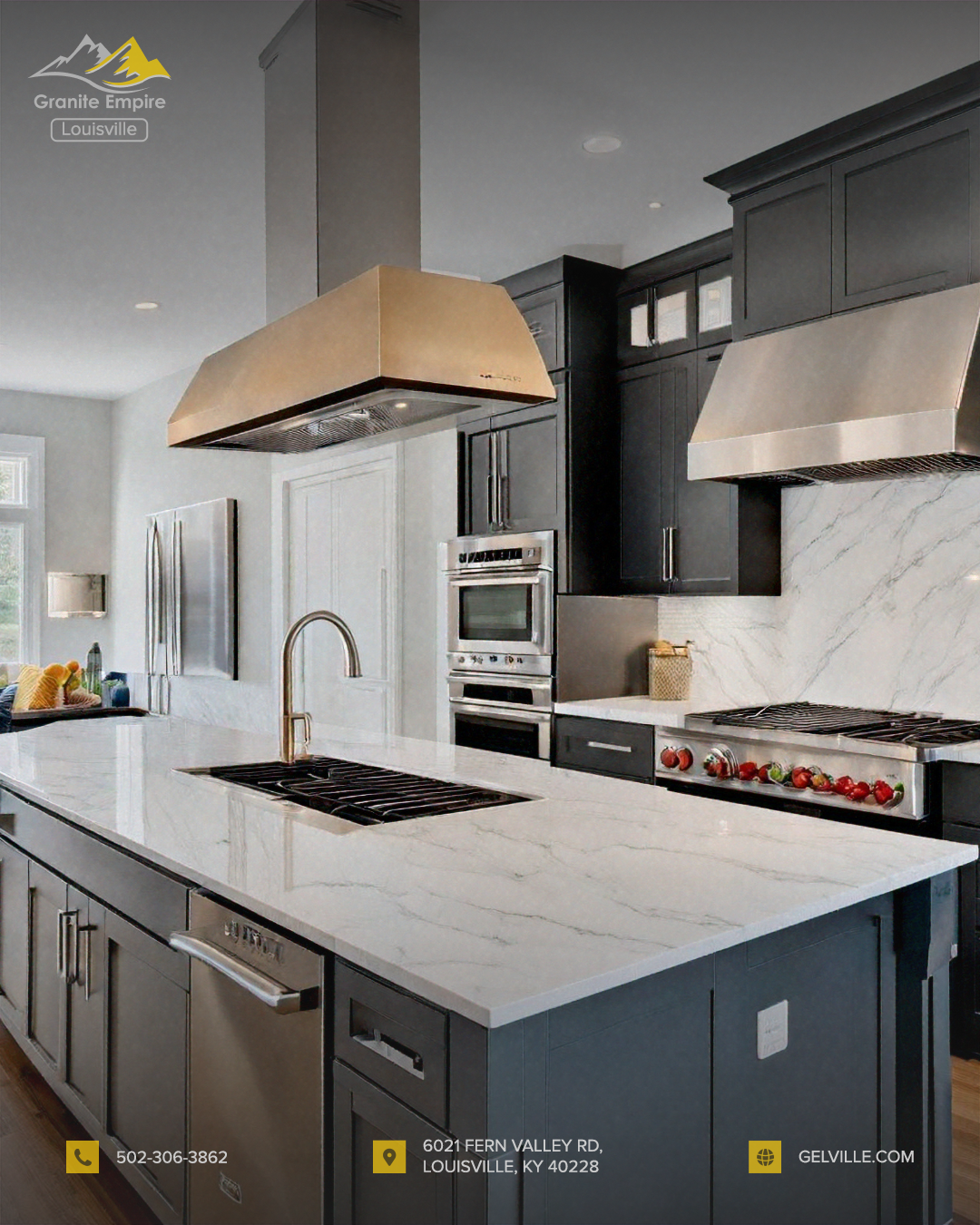
Yes, marble countertops are higher maintenance than quartz and usually more sensitive than granite, but they can still be practical when homeowners understand how the stone behaves. At Granite Empire of Louisville, we explain this to homeowners comparing marble countertops in Lyndon, KY because marble is beautiful, natural, and classic, but it needs realistic expectations around stains, etching, sealing, and daily cleaning.
Marble is not a careless countertop. It rewards good habits. If someone wants a surface that never reacts to lemon juice, coffee, makeup, oil, or wine, marble may not be the easiest choice.

Are marble countertops high maintenance?
Yes, marble countertops are considered high maintenance compared with quartz and granite because marble can etch, stain, scratch, and develop a patina over time. That does not mean marble is weak. It means the homeowner should know what kind of care comes with the material.
Marble is a calcium-based natural stone, so acidic products can leave dull marks on the surface. Lemon juice, vinegar, tomato sauce, wine, and some cleaners can react with marble even when the surface is sealed.
For marble countertops in Lyndon, KY, we usually ask how the kitchen or bathroom is used. A showpiece island, a baking area, a vanity, and a busy family kitchen do not all need the same material.
What makes marble different from granite and quartz?
Marble is softer and more acid-sensitive than granite and quartz, which is why it needs more careful maintenance. Granite is a harder natural stone with strong heat resistance, while quartz is engineered for low maintenance and strong stain resistance.
| Material | Starting price | Durability | Heat resistance | Stain resistance | Maintenance |
|---|---|---|---|---|---|
| Granite | From $39 per sq ft | Very strong | Excellent | Good when sealed | Moderate |
| Quartz | From $55 per sq ft | Strong | Good, use trivets | Very good | Low |
| Marble | From $75 per sq ft | Moderate | Good, but protect it | Moderate | Higher |
| Quartzite | Varies by slab | Very strong | Excellent | Good when sealed | Moderate |
At Granite Empire of Louisville, we help homeowners compare granite, quartz, marble, quartzite, and other countertop materials by real daily use. The right surface depends on cooking habits, cleaning habits, design goals, and tolerance for natural wear.
Does marble stain easily?
Marble can stain if liquids absorb into the stone, especially when the surface is not sealed or spills sit too long. Coffee, wine, oil, makeup, hair products, and dark sauces can all leave marks if they are not cleaned quickly.
Sealing helps reduce staining, but it does not make marble completely stain-proof. A sealer slows absorption. It does not stop acid etching, and it does not replace basic care.
In real homes, the sink area, coffee station, cooking zone, and vanity top usually see the most risk. Those are the areas where quick cleanup matters most.
Why does marble etch?
Marble etches because acidic substances react with the stone and create dull spots on the surface. Etching is not the same as staining. A stain changes the color; an etch changes the surface sheen.
Lemon juice, vinegar, citrus cleaners, tomato sauce, wine, and some bathroom products can etch marble. Even a sealed marble surface can etch because sealers protect against absorption, not acid reaction.
This is the point many homeowners miss. Marble can be sealed and still get dull spots from acid.
Do marble countertops need to be sealed?
Yes, marble countertops should be sealed because sealing helps protect the stone from stains and liquid absorption. The sealing schedule depends on the marble type, finish, use, and cleaning habits.
A polished finish may show etching more clearly because dull spots contrast with the shiny surface. A honed finish may hide etching better, but it can show oils or moisture differently.
For marble countertops in Lyndon, KY, we recommend talking about sealing before installation. The care plan should be part of the material decision, not an afterthought.
Is marble good for kitchens?
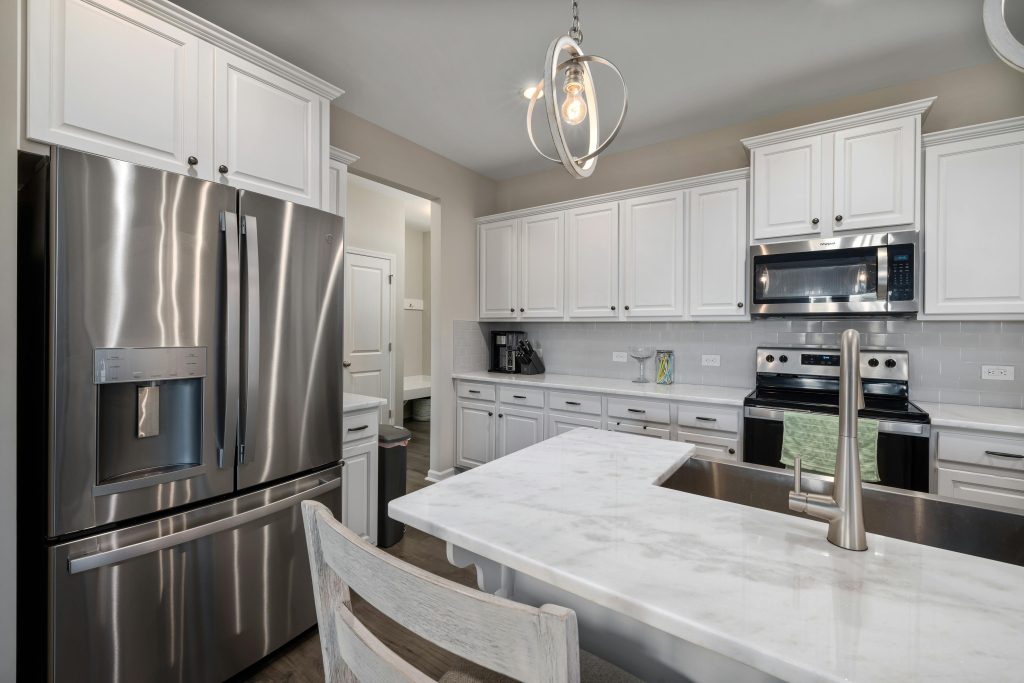
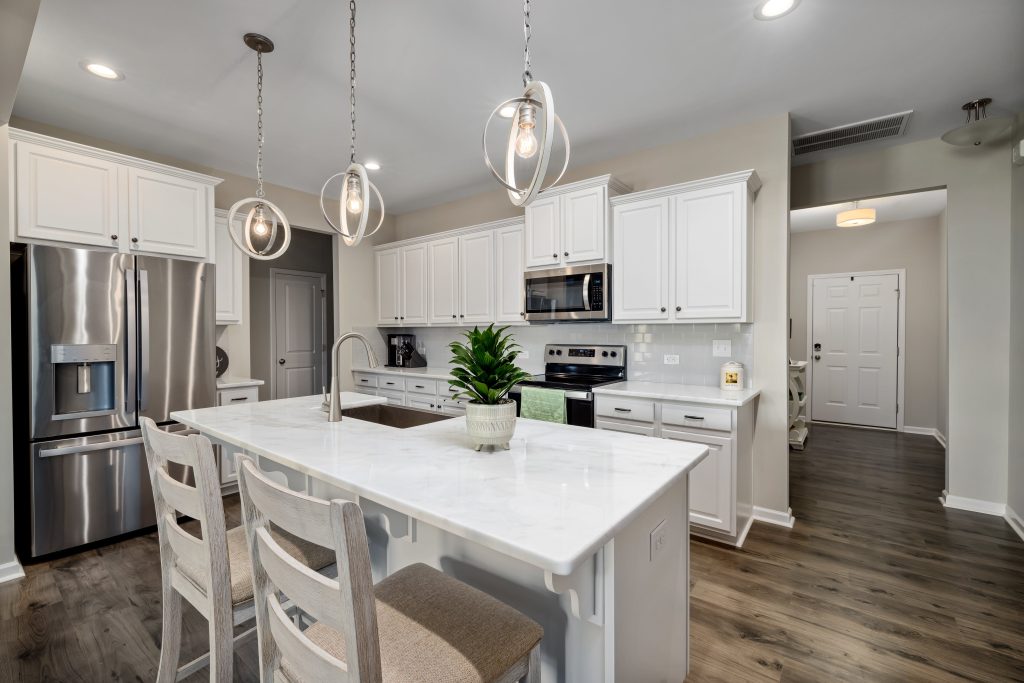
Marble can be good for kitchens when the homeowner accepts natural wear, protects the surface, and likes the look of patina. It may not be the best fit for someone who wants a perfect surface with very little upkeep.
Many homeowners love marble because it feels soft, bright, natural, and classic. It can make a kitchen feel more custom and more personal than a heavily patterned manufactured surface.
But a busy cooking family may prefer quartz or granite. A homeowner who loves baking, uses cutting boards, wipes spills quickly, and does not panic over small marks may still enjoy marble.
Is marble better for bathrooms than kitchens?
Marble is often easier to manage in bathrooms than in busy kitchens because bathrooms usually have less food acid, less cooking oil, and fewer hot pans. However, bathrooms still expose marble to water, soap, toothpaste, makeup, perfume, and hair products.
A bathroom vanity with marble can work well when products are wiped up and harsh cleaners are avoided. Trays under bottles can help reduce rings and stains.
Marble around a bathroom sink still needs care. It is beautiful, but it is not maintenance-free.
What daily care does marble need?
Marble needs quick spill cleanup, mild cleaner, soft cloths, cutting boards, trays, trivets, and periodic sealing. The routine is simple, but it needs consistency.
Helpful habits include:
- Wipe coffee, wine, citrus, and oil quickly
- Use pH-neutral stone cleaner or mild soap
- Avoid vinegar, bleach, and abrasive cleaners
- Use cutting boards instead of cutting on the stone
- Use trivets under hot pans
- Place trays under bathroom products
- Reseal when the stone starts absorbing water
These habits do not make marble hard to live with. They make it more predictable.
How does finish affect marble maintenance?
Finish affects how marble looks as it wears. Polished marble looks glossy and formal, but etching can stand out more. Honed marble has a softer matte finish and may hide etching better, but it can show oils and fingerprints depending on the stone.
| Marble finish | Look | Maintenance note | Best fit |
|---|---|---|---|
| Polished | Glossy and reflective | Etching may be more visible | Formal kitchens, vanities |
| Honed | Matte and softer | Can hide etching better | Busy kitchens, relaxed designs |
| Leathered/textured | Subtle texture | Varies by stone | Design-focused projects |
For marble countertops in Lyndon, KY, finish choice is one of the most important conversations. The same marble can feel very different when polished versus honed.
How much do marble countertops cost?
Marble starts from $75 per square foot, while granite starts from $39 per square foot and quartz starts from $55 per square foot. Final pricing depends on slab selection, square footage, edge profile, sink cutouts, backsplash details, fabrication, delivery, and installation.
| Cost factor | Why it matters |
|---|---|
| Slab selection | Different marble varieties have different prices |
| Square footage | Larger kitchens and islands need more material |
| Edge profile | Decorative edges add fabrication work |
| Sink cutout | Undermount sinks require precise cutting and polishing |
| Seams | Layout affects seam planning and fabrication |
| Backsplash | Matching stone backsplash adds material and labor |
| Installation access | Heavy slabs require safe handling and delivery |
A good estimate should explain the scope. Material price alone does not tell the full project cost.
How long does marble countertop installation take?
Most countertop projects take about 7–10 days from template to installation once the material is selected and cabinets are ready. The timeline can vary based on slab availability, fabrication details, sink selection, edge profile, and project complexity.
The usual process includes material selection, template, fabrication, edge finishing, sink and faucet cutouts, delivery, installation, seam setting, and final review.
At Granite Empire of Louisville, we provide fabrication and installation for marble, granite, quartz, quartzite, and other countertop materials. Cabinets should be level and secure before templating begins.
What services are included in a marble countertop project?
A marble countertop project can include material selection, template, fabrication, edge finishing, sink cutouts, faucet holes, delivery, and installation. The exact details should be confirmed before the estimate is approved.
A typical project may include:
- Slab or material selection
- Field measurement and template
- Seam and overhang planning
- Fabrication
- Edge finishing
- Sink, faucet, or cooktop cutouts
- Delivery
- Installation
- Care guidance after installation
At Granite Empire of Louisville, we want homeowners to understand the whole process before the stone is cut. Marble is too specific to choose without discussing use, finish, and maintenance.
Who should avoid marble countertops?
Homeowners should avoid marble if they want a nearly maintenance-free countertop, dislike patina, or know they will be bothered by small etches and surface changes. Quartz or granite may be a better fit in those cases.
Marble is best for people who like natural stone character and understand that the surface may change over time. Some homeowners see patina as charm. Others see it as damage.
For marble countertops in Lyndon, KY, we would rather have an honest conversation before purchase than have a homeowner feel surprised later.
What mistakes should homeowners avoid with marble?
Homeowners should avoid choosing marble from a small sample only, using harsh cleaners, skipping sealing, ignoring finish options, and expecting it to perform like quartz. These mistakes create most marble regrets.
Another mistake is choosing marble only because it looks expensive. The lifestyle fit matters more than the photo.
Marble can be the right choice, but it should be chosen with open eyes. That is the difference between loving the stone and fighting it every day.
FAQ
Are marble countertops high maintenance?
Yes. Marble needs more care than quartz and usually more attention than granite because it can etch, stain, and scratch.
Do marble countertops need sealing?
Yes. Marble should be sealed to help reduce staining and liquid absorption.
Can marble still etch after sealing?
Yes. Sealing helps with stains, but it does not prevent acid etching.
What stains marble countertops?
Coffee, wine, oil, makeup, sauces, and dark liquids can stain marble if they sit too long.
Is honed marble easier to live with than polished marble?
Often, yes. Honed marble can make etching less noticeable than polished marble.
How much does marble start at?
Marble starts from $75 per square foot, depending on slab selection and project details.
How long does countertop installation take?
Most projects take about 7–10 days from template to installation after material selection and cabinet readiness.
Where can Lyndon homeowners start?
Granite Empire of Louisville is located in Louisville, KY, and serves nearby communities, including Lyndon, KY. We help homeowners choose, fabricate, and install marble, granite, quartz, quartzite, and other countertop materials for kitchens, bathrooms, islands, and vanities. If you are comparing marble countertops in Lyndon, KY, our team can help you understand maintenance, pricing, slab selection, fabrication, installation, and the 7–10 day timeline from template to installation.