


In the middle of a remodel, the word “handyman” can sound like relief. Someone who can “just handle it,” someone affordable, someone available this week when everyone else is booked. And sometimes, for certain tasks, a handyman is exactly the right call. But countertops are not one of those tasks—not if you care about how the kitchen looks next month, how it holds up next year, and whether you’ll still trust it five years from now.
Countertops are a finish surface, but they behave like a structural system. They span cabinets, support sinks, interact with plumbing, and carry weight in the most used room in the house. That means the long-term outcome is determined less by how the countertop looks on installation day and more by what happened underneath it—templating accuracy, cabinet readiness, seam planning, cutout reinforcement, adhesives, and support. These are not details you can “figure out as you go.”
At Granite Empire of Louisville, we often meet homeowners after the damage has already happened. They were trying to save money. They hired the wrong person for the job. Now they’re looking at a chip that keeps growing, a seam that catches crumbs, a sink that feels unstable, or a crack that appeared weeks later “for no reason.” If you’re comparing countertop installers in Okolona, KY, the honest truth is this: the risks of a handyman install aren’t always visible immediately. They show up later, when repairs are expensive and warranties are nowhere to be found.
Why Countertops Are Not a “General Skill” Job
A handyman may be excellent at a dozen things—drywall, trim, tile repairs, basic plumbing. But countertop installation is a specialized craft for one simple reason: stone and engineered surfaces do not forgive guesswork.
Countertops must be templated precisely. They must be fabricated with the correct tolerances. They must be transported and handled without stress fractures. They must be set on cabinets that are actually level and stable, not “close enough.” Seams must be planned where they make sense visually and structurally. Sink cutouts must be reinforced. Edge profiles must be finished correctly. Adhesives and support methods must match the material and the conditions of the home.
That’s why true countertop installers in Okolona, KY don’t operate like general contractors. They operate like precision teams. They rely on specialized equipment, proven processes, and experience that comes from doing the same job thousands of times.
At Granite Empire of Louisville, we don’t view installation as a final step. We view it as the step that determines whether everything else you paid for actually works.
The Most Common “Handyman Install” Problems Don’t Start at Installation Day
Here’s what surprises homeowners: the biggest long-term problems often begin before the countertop is ever set.
Templating is a prime example. A handyman may measure with a tape and assume that’s enough. Professional countertop installers in Okolona, KY template with systems designed to capture real-world conditions: walls that aren’t perfectly straight, corners that aren’t perfectly square, cabinet runs that have slight bows, and islands that are subtly racked. Kitchens are rarely perfectly geometric. Granite and quartz don’t care. They still need to fit.
If templating is off by even a little, the countertop may be forced into place, leaving stress in the stone or awkward gaps that get “fixed” with heavy caulk lines. That stress can become a crack weeks later. That gap can become a permanent visual annoyance. And once the stone is cut, you can’t simply stretch it to fit.
When homeowners compare countertop installers in Okolona, KY, templating quality is one of the first signs of professionalism. At Granite Empire of Louisville, we treat templating like the blueprint stage, because that’s exactly what it is.
Seams: The Long-Term Giveaways of a Non-Professional Install
Seams are where “cheap” shows up, even in an expensive kitchen.
A handyman may place seams wherever the pieces happen to fit. A professional installer plans seams with intent: they consider sight lines, pattern flow, daily use zones, and structural support. They avoid placing seams where you’ll prep food constantly or where you’ll stare at them under direct light. They align movement in the stone so it looks intentional, not random. They use proper adhesives and clamping methods to keep seams tight and stable.
The long-term risks of poor seam planning are surprisingly annoying. Seams can become crumb traps. They can discolor. They can shift slightly if the cabinets move or if the seam wasn’t properly supported. And once you see a seam that looks wrong, you can’t unsee it.
This is one reason homeowners who hire true countertop installers in Okolona, KY rarely regret the investment. The kitchen looks finished, not patched together.
At Granite Empire of Louisville, seam placement is one of the details we obsess over because it’s where craftsmanship becomes visible.

Sink Cutouts and Support: Where the Serious Problems Begin
If you want to know where handyman installs fail most dramatically over time, look at the sink zone.
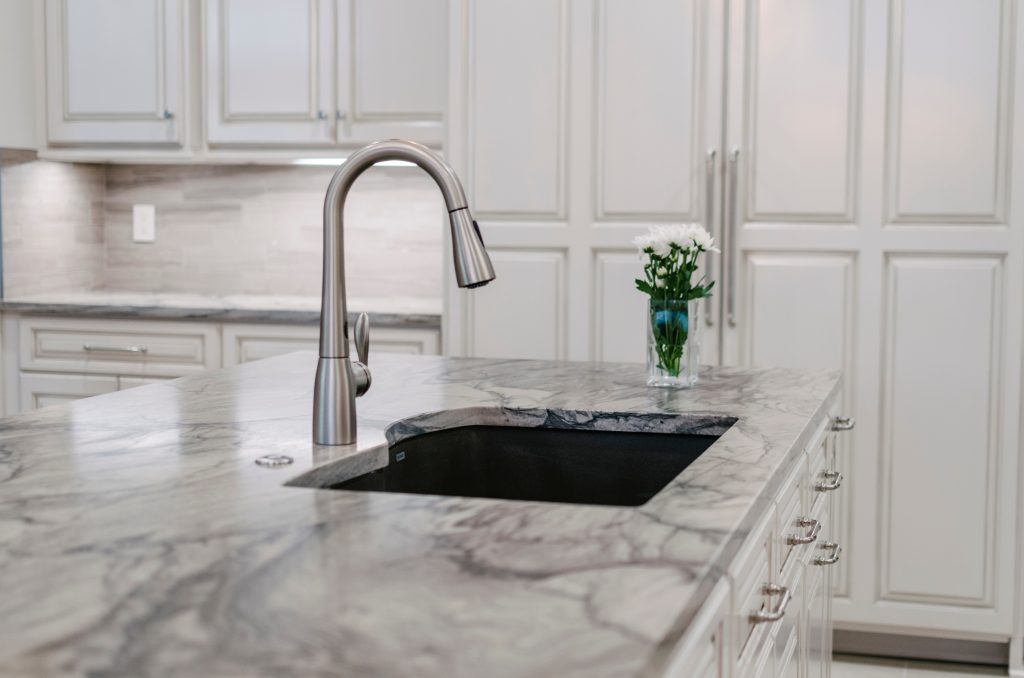
Undermount sinks, in particular, require correct support systems and proper adhesive methods. If the sink is not supported correctly, it can shift. That movement transfers stress to the countertop around the cutout. It can lead to chips at the rim, cracks near corners, or an undermount sink that feels loose months later. Sometimes the homeowner discovers the issue only when a sink full of water feels heavier than it should—because it is. The support has started to fail.
A handyman might rely on “strong glue” and hope for the best. A professional team understands load, hardware, and long-term performance. They coordinate sink mounting properly, reinforce where needed, and ensure the cutout edges are finished and protected.
If you’re searching for countertop installers in Okolona, KY, ask how they support undermount sinks and how they treat cutout corners. The answer will tell you whether they’re preventing future problems or simply completing a job.
At Granite Empire of Louisville, we treat the sink zone as the highest-risk area—because it’s where real life hits hardest.
Cabinet Readiness: The Quiet Factor That Causes Cracks Later
One of the most misunderstood countertop risks is cabinet level and stability. Many cabinets look level enough until you put a rigid stone surface on top. Then the countertop becomes the first thing to reveal the truth: the run dips slightly, the island has a subtle twist, the corner isn’t properly shimmed, or a span is unsupported.
A handyman may not check cabinet flatness thoroughly, or may assume minor variations won’t matter. Professional countertop installers in Okolona, KY know that “minor” becomes major under stone. A countertop should never be used to force cabinets into alignment. That creates stress. Stress becomes cracks—sometimes immediately, sometimes weeks later.
At Granite Empire of Louisville, we evaluate support and flatness because we’re protecting the stone and the homeowner’s investment. This is one of the biggest long-term differences between specialized installers and general installs: professionals design the system to stay stable over time.
The “Looks Fine Today” Trap: Why Problems Show Up Weeks Later
A handyman install can look okay at first. That’s what makes the decision tempting. The countertop sits there. It appears straight. The kitchen looks done. Then weeks pass, and the problems surface.
A hairline crack appears near the sink corner. A seam becomes more visible. The caulk line grows ugly because it was hiding an imperfect fit. The countertop starts to feel “off” when you run your hand along an edge. The sink feels less secure. The faucet base develops persistent water issues because the cutout edge wasn’t finished correctly.
These aren’t random events. They’re delayed consequences of small installation decisions.
That’s why hiring true countertop installers in Okolona, KY isn’t about paying for a prettier install day. It’s about paying for fewer surprises after the installers leave.
At Granite Empire of Louisville, we build countertops to be lived on, not just looked at.
Warranties and Accountability: The Risk That Hits You When Something Goes Wrong
The most expensive part of a handyman install often arrives when you need help later.
If a countertop cracks due to installation stress, who is responsible? If a sink support fails, who comes back? If a seam separates or discolors, who fixes it? Handyman work often comes with informal guarantees at best. Many homeowners discover too late that they have no clear warranty, no documentation, and no manufacturer support because the installation wasn’t performed within recommended standards.
Professional countertop installers in Okolona, KY typically provide clearer accountability. They document the process. They follow known methods. They stand behind the work because their business depends on it.
At Granite Empire of Louisville, we believe the countertop experience should include confidence—before, during, and after installation. The goal isn’t just a finished kitchen. It’s a finished kitchen that stays finished.
So What Do You Actually Risk in the Long Run?
When you choose a handyman install for countertops, you risk more than cosmetic issues. You risk:
Stress cracks that appear weeks later
Chips at corners and sink edges from poor support
Seams that look random, trap debris, or shift
Bigger caulk lines and awkward gaps that never look clean
A sink setup that fails over time
No clear warranty or accountability
Paying twice—once for the cheap install, and again for repair or replacement
The real cost isn’t always money. It’s the constant low-level frustration of a kitchen that never feels quite right.
If you’re comparing countertop installers in Okolona, KY, the smartest decision is to treat countertops as a specialized trade. That doesn’t mean you need the most expensive option. It means you need the most competent one.
Granite Empire of Louisville focuses on the details that protect your countertop long after the photos are posted: accurate templating, careful seam planning, proper support, clean cutouts, and installation methods built for longevity. Because a countertop should be the stable foundation of your kitchen—not the next repair project waiting to happen.