


Some countertop installation issues are cosmetic, but others can lead to cracks, movement, water intrusion, or damage to the cabinets below. The problems we take most seriously are an opening seam, a countertop that moves under pressure, a new crack, a poorly supported overhang, an unstable sink, or a cutout that leaves too little material around an appliance.
When homeowners inspect new countertops in Louisville, KY, we recommend paying attention to changes in stability and fit rather than expecting every wall or seam to be visually perfect. At Granite Empire of Louisville, we look at how the countertop is supported, how sections meet, and whether sinks, cooktops, and cabinets are working together as planned.

Which Countertop Problems Need Immediate Attention?
Problems that involve movement, progressive cracking, unsupported weight, or a failing joint should be checked promptly. These conditions can worsen with normal use because stone and engineered surfaces are rigid and rely on stable support.
The most important warning signs include:
- A seam that is widening or changing height
- A countertop that rocks, flexes, or lifts when pressure is applied
- A crack that appeared after installation or continues to grow
- A loose undermount sink
- An overhang that lacks appropriate support
- A cooktop or sink cutout with visible cracking at a corner
- Cabinets that appear to be shifting below the countertop
A small gap at a wall can be a different situation. Walls are often not perfectly straight, and backsplash or caulk can accommodate some variation. The key is distinguishing an appearance issue from a condition that affects support or structural stability.
When Is a Countertop Seam a Real Problem?
A seam becomes concerning when it opens, shifts vertically, moves under pressure, or begins to separate from the adhesive. A visible seam by itself is not necessarily a defect.
Large kitchens, long runs, islands, slab dimensions, transportation limits, and stone patterns can all make seams necessary. What matters is whether the two sections are properly supported and aligned.
When we evaluate countertops in Louisville, KY, we pay particular attention to seams near sinks and cooktops because cutouts already remove a significant amount of material. If a seam begins changing after installation, the cause may be adhesive failure, cabinet movement, or uneven support.
A seam that looks more noticeable under certain lighting may simply be emphasized by the material pattern. A seam that physically moves is a different issue.
Why Should You Pay Attention to a Countertop That Moves?
A countertop should feel stable during normal use. If one side lifts when someone leans on an overhang or the surface rocks against the cabinets, the support system needs to be evaluated.
Movement can place stress on seams, narrow strips around sink cutouts, and inside corners. It can also affect caulk lines and the fit against walls.
For example, a large island may have a seating overhang. The need for brackets or another support method depends on the material, thickness, overhang depth, cabinet configuration, and fabrication design.
At Granite Empire of Louisville, we consider support before installation so the stone is not being asked to span a distance that the project was not designed to handle.
Is a Crack After Installation Always Serious?
A new crack should be inspected, even though not every line in natural stone is a structural crack. Granite and marble can contain natural fissures and mineral features that were present before fabrication.
The concern is a line that appears after installation, continues through the thickness or edge, changes over time, or develops near a stress point. Sink and cooktop corners, seams, unsupported spans, and areas above uneven cabinets deserve particular attention.
If a crack is caused by movement or inadequate support, repairing the visible line without correcting the cause can lead to another failure. The support condition should be addressed first.
What Problems Around a Sink Should You Never Ignore?
Movement, cracking, or a loose sink should be checked quickly. Sink areas are among the more vulnerable parts of a countertop because a large opening removes material from the slab.
An undermount sink should have an appropriate support method rather than depending only on adhesive. The exact support system varies with the sink and cabinet configuration.
We also look at the remaining stone in front of and behind the sink. If a narrow strip begins cracking, the cause may involve impact, stress, installation conditions, or inadequate support.
Water matters too. A failing sink seal or faucet leak can allow moisture into the cabinet below even when the stone itself is unaffected.
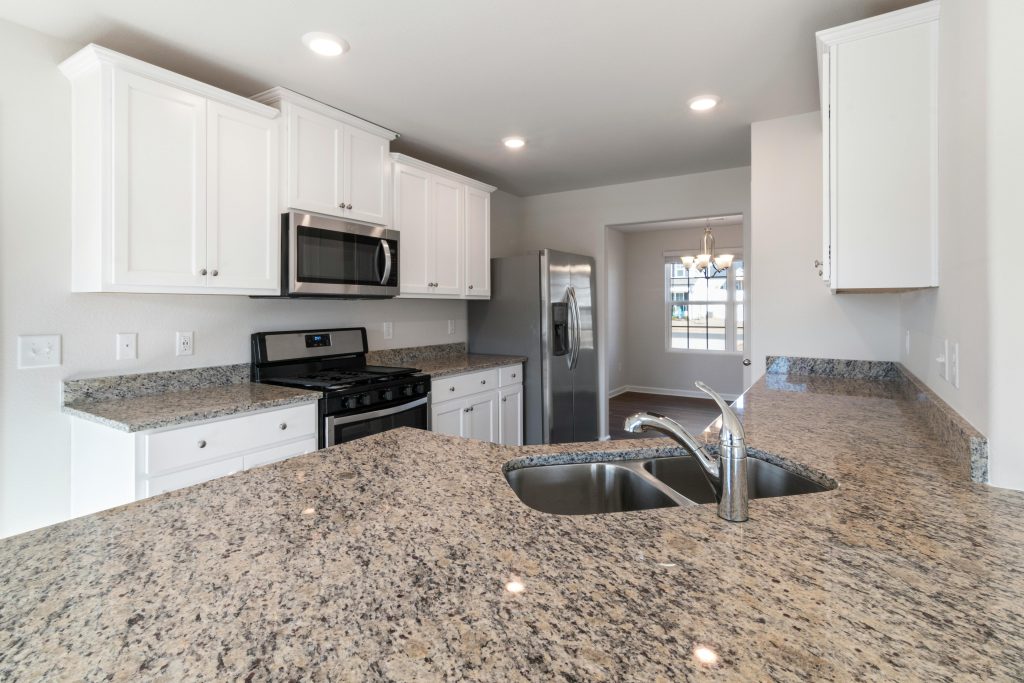
When Is a Sink Cutout Problem More Than Cosmetic?
A cutout deserves attention when the sink does not fit correctly, the reveal is seriously uneven, exposed edges are damaged, or modification has left too little material around the opening. Small visual differences do not automatically mean the countertop is unsafe.
The sink model and manufacturer template should guide fabrication. If a homeowner wants to change to a larger sink later, the existing opening, cabinet width, faucet holes, nearby seams, and remaining stone all need to be evaluated before additional cutting.
For countertops in Louisville, KY, post-installation cutting can sometimes be done, but it carries vibration, chipping, and cracking risks. We prefer to have the final sink selected before fabrication whenever possible.
What Should You Check Around a Cooktop?
The cooktop should fit the fabricated opening according to the appliance manufacturer’s required dimensions and clearances. A large unexplained gap, a visibly incorrect cutout, or cracking at the corners should be evaluated.
Cooktop cutouts create narrow sections of countertop in front of and behind the appliance. These areas can be sensitive to stress if cabinets are uneven or the remaining material is poorly supported.
Heat exposure is another consideration. Granite and marble generally tolerate heat well, while engineered quartz contains polymer resins and is more sensitive to high temperatures. We still recommend following the countertop and appliance manufacturers’ guidance rather than treating any surface as heat-proof.
Are Gaps Between the Countertop and Wall Always a Problem?
No. Small gaps can occur because walls are rarely perfectly straight or square. A properly planned backsplash or suitable sealant can often finish the transition cleanly.
A larger gap deserves more attention if it suggests that the countertop was fabricated to the wrong dimensions, cannot sit correctly on the cabinets, or is being forced out of position.
We distinguish between a wall irregularity and a countertop fit problem. Moving the countertop simply to hide one gap can create a new alignment issue somewhere else.
Can Uneven Cabinets Damage a New Countertop?
Yes. Cabinets that are significantly out of level, loose, or unstable can put uneven stress on rigid countertop materials.
The cabinet system should be secured and properly prepared before final templating and installation. A stone slab should not be forced to conform to a cabinet run that is moving or substantially uneven.
At Granite Empire of Louisville, we check project readiness because a stable base is essential for both fabrication accuracy and long-term countertop performance.
How Do Granite, Quartz, and Marble Respond to Installation Problems?
All three materials require stable support, but their properties and maintenance needs differ.
| Material | Installation Concern | Heat Consideration | Stain / Maintenance Consideration |
|---|---|---|---|
| Granite | Can crack at stressed cutouts or unsupported areas | Generally highly heat resistant, but trivets are still recommended | Some granite may need periodic sealing |
| Quartz | Rigid material can crack under stress; cutouts need proper support | More sensitive to high heat because of resin binders | Generally nonporous and does not need penetrating sealer |
| Marble | Softer surface can scratch or chip; stress can still cause cracking | Naturally heat resistant, but protection is recommended | Can stain and can etch from acids; sealing does not prevent etching |
For homeowners considering replacement countertops in Louisville, KY, our current starting material prices are:
| Material | Starting Material Price |
|---|---|
| Granite | $39 per sq. ft. |
| Quartz | $55 per sq. ft. |
| Marble | $75 per sq. ft. |
These are starting material prices rather than complete installed project totals. Edge profiles, slab selection, cutouts, seams, fabrication requirements, delivery, and installation conditions can change the final estimate.
What Should You Check Before the Installer Leaves?
A quick inspection is useful because it gives us a chance to discuss questions while the finished project is still fresh. We focus on function and stability first, then appearance.
Check:
- Whether the countertop feels stable
- Whether seams are aligned and firmly joined
- Whether the sink is secure and properly positioned
- Whether faucet holes match the planned layout
- Whether the cooktop opening fits the specified appliance
- Whether overhangs have the planned support
- Whether there are new chips or cracks
- Whether doors and drawers still open without interference
Photographs can also be useful if something changes later. A seam that is stable on installation day but begins widening after several weeks should be reevaluated.
For homeowners reviewing countertops in Louisville, KY after installation, the most important question is whether the condition is stable or changing. A small cosmetic variation that remains unchanged is very different from movement, a widening seam, or a developing crack.
Can Installation Problems Usually Be Repaired?
Many can, but the repair depends on the cause. A seam may be refinished or reset, a sink may need improved support, and some chips can be repaired without replacing the slab.
Structural movement is different. If cabinets are shifting or an overhang lacks necessary support, we address that condition before repairing the visible countertop damage.
Granite Empire of Louisville handles fabrication and professional installation as part of our countertop work. Our services can include measurements and templating, slab planning, custom fabrication, sink and cooktop cutouts, edge finishing, delivery, seam fitting, and installation.
Our typical fabrication period is about 7-10 days after templating when the selected material is available and the project is ready.

FAQ
Is a visible countertop seam automatically a bad installation?
No. Many countertop layouts require seams. The bigger concerns are movement, widening, poor alignment, or a seam that begins changing after installation.
Should a countertop move when I lean on it?
No. Noticeable movement should be inspected because it may indicate inadequate support or an unstable cabinet base.
Is a small gap between a countertop and wall normal?
It can be. Walls are often uneven, and small gaps may be covered by backsplash or sealant. Large or inconsistent gaps may need further evaluation.
Can an undermount sink be held only by silicone?
We do not recommend assuming adhesive alone is sufficient. The sink should have a support method appropriate for its size, weight, and cabinet configuration.
Can a cracked countertop be repaired?
Sometimes. Repairability depends on the material, crack location, severity, and whether the underlying cause can be corrected.
How soon should I report a countertop problem?
Report movement, an opening seam, a loose sink, or a new crack as soon as you notice it. Early inspection can help prevent additional damage.
How long does new countertop fabrication take?
Our typical fabrication period is approximately 7-10 days after templating when material is available and the site is ready.
Countertop Fabrication and Installation in Louisville, KY
Granite Empire of Louisville serves Louisville, KY and surrounding communities with measurements, templating, countertop fabrication, delivery, and professional installation. We work with granite, quartz, marble, and other countertop materials and help homeowners evaluate both new projects and installation concerns. If you are planning countertops in Louisville, KY, we can help make sure the material, cutouts, seams, cabinet support, and installation details are considered before the finished surface goes into everyday use.