

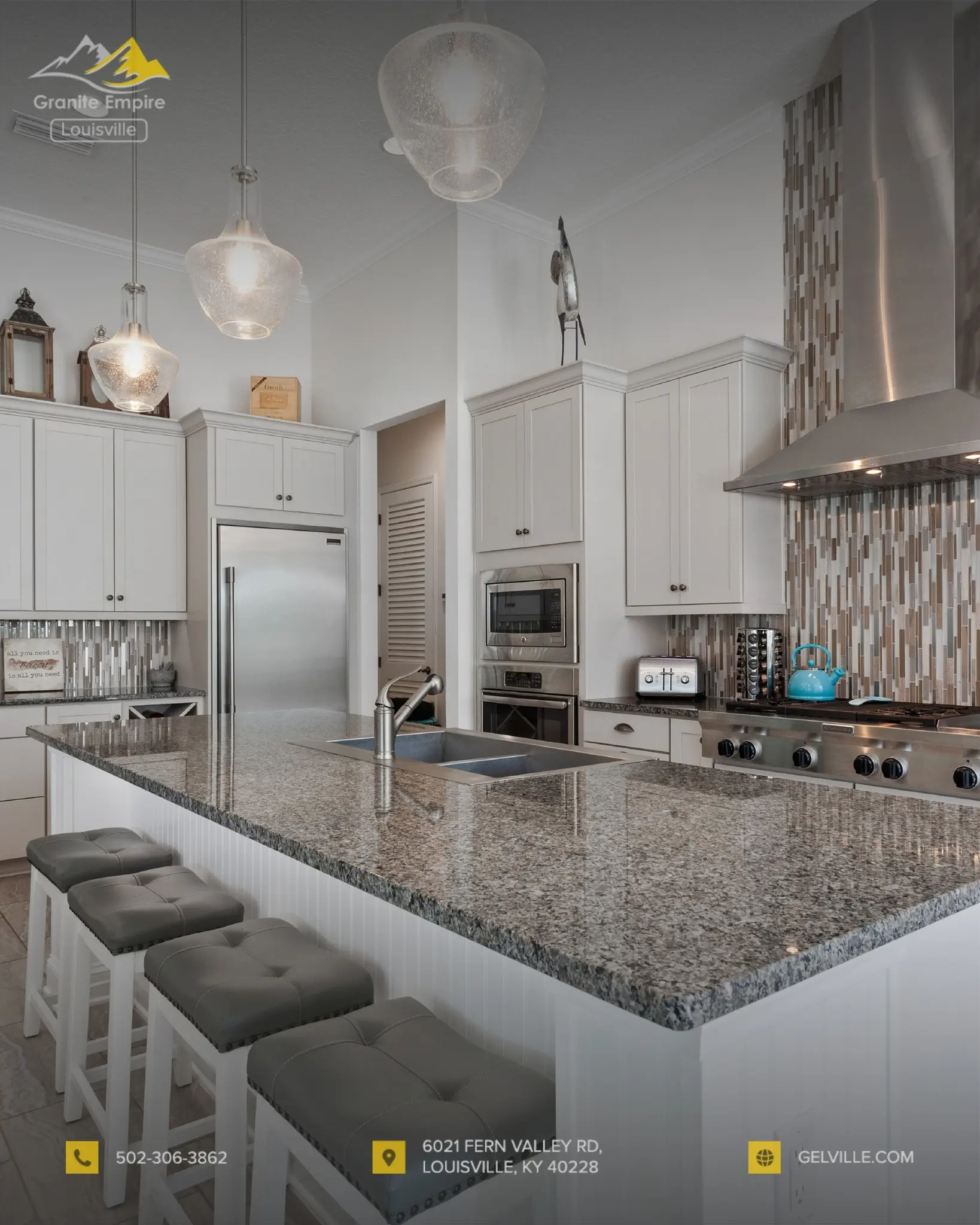
Homeowners should know that granite countertops are durable, heat-resistant, naturally unique, and practical for busy kitchens, but they still require the right slab selection, sealing, cabinet support, fabrication, and installation planning. At Granite Empire of Louisville, we explain this to homeowners comparing granite stores in Middletown, KY because granite is not a one-sample decision. The slab you choose, the way it is cut, and the way it is installed all affect the final kitchen.
Granite can be a smart choice for kitchens, islands, bathrooms, laundry rooms, and remodel projects. But before choosing it, homeowners should understand how granite behaves in real daily use.
Is granite still a good countertop choice?
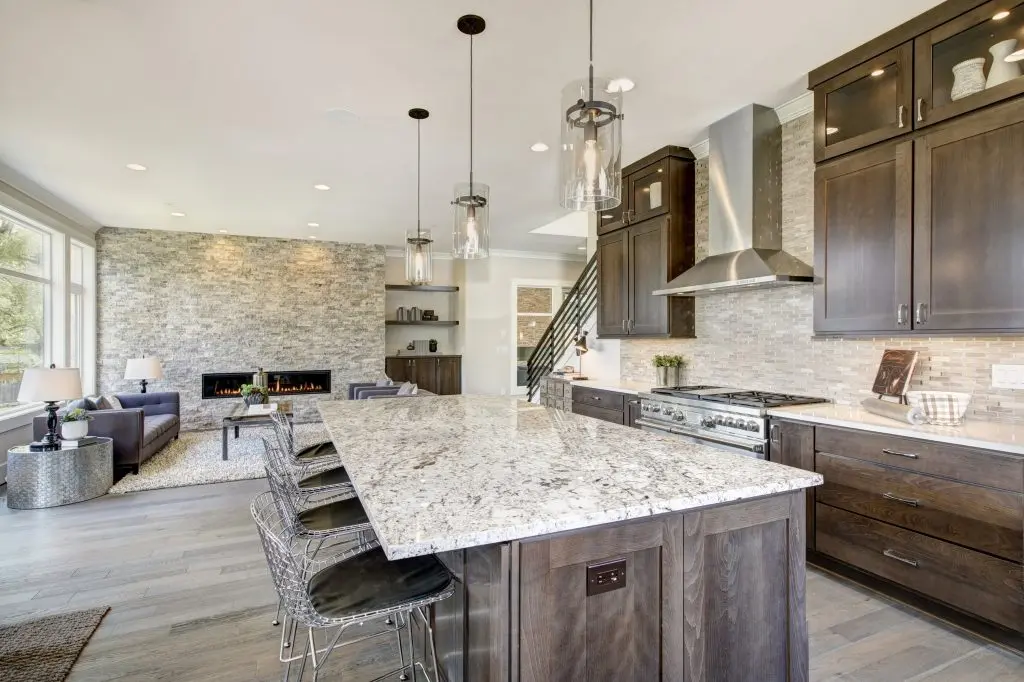
Yes, granite is still a good countertop choice because it is strong, natural, heat-resistant, and available in many colors and patterns. It works well for homeowners who want a durable surface with real stone movement.
Granite has more natural variation than quartz. That means two slabs with the same color name can still look different. Some homeowners love that because the countertop feels one-of-a-kind.
For kitchens that see cooking, coffee, groceries, kids, and heavy cookware, granite remains one of the most practical natural stone options.
What should you look for when viewing a granite slab?
You should look at the full slab, not only a small sample. Granite can have movement, mineral spots, color shifts, veining, and natural variation that may not show in a sample piece.
When homeowners visit granite stores in Middletown, KY, they should pay attention to the slab’s background color, pattern direction, dark or light areas, and how the stone will look with cabinets and flooring. Lighting also matters. A slab can look warmer or cooler depending on the room.
A small sample can help with general color, but it cannot show the full personality of the stone.
How does granite compare with quartz and marble?
Granite is usually more heat-resistant than quartz and easier to live with than marble in busy kitchens. Quartz is lower maintenance because it does not need sealing, while marble has a classic look but is more sensitive to etching and stains.
| Material | Starting price | Durability | Heat resistance | Stain resistance | Maintenance |
|---|---|---|---|---|---|
| Granite | From $39 per sq ft | Very strong | Excellent | Good when sealed | Moderate |
| Quartz | From $55 per sq ft | Strong | Good, use trivets | Very good | Low |
| Marble | From $75 per sq ft | Moderate | Good, but protect it | Moderate | Higher |
| Quartzite | Varies by slab | Very strong | Excellent | Good when sealed | Moderate |
At Granite Empire of Louisville, we help homeowners compare granite, quartz, marble, quartzite, and other countertop materials by lifestyle, not just by appearance. A serious cook, a rental property owner, and a homeowner remodeling for resale may all need different advice.
Does granite need to be sealed?
Yes, granite usually needs sealing to help protect it from stains. Sealing does not make granite impossible to stain, but it gives the stone better resistance against liquids, oils, coffee, wine, and daily kitchen spills.
The sealing schedule depends on the specific granite and how the kitchen is used. Some stones are denser than others. A busy family kitchen may need more attention than a guest bathroom vanity.
The daily routine is simple: wipe spills quickly, use mild stone-safe cleaners, and avoid harsh acidic products.
Can granite handle hot pans?
Yes, granite has excellent heat resistance, but we still recommend using trivets. The stone itself can handle heat better than many materials, but seams, sealers, edges, and areas around cutouts should still be protected.
A hot pan placed directly on granite one time may not cause damage. Repeated thermal shock, however, is never a good habit for any countertop.
| Situation | Granite risk level | Best habit |
|---|---|---|
| Warm plate | Low | Usually fine |
| Coffee mug | Low | Wipe rings as needed |
| Hot pan from stove | Low to moderate | Use a trivet |
| Baking sheet from oven | Moderate | Use heat protection |
| Slow cooker or air fryer | Moderate | Use a heat-safe barrier |
Granite is durable, but smart use helps it last longer.
Can granite stain from coffee, oil, or wine?
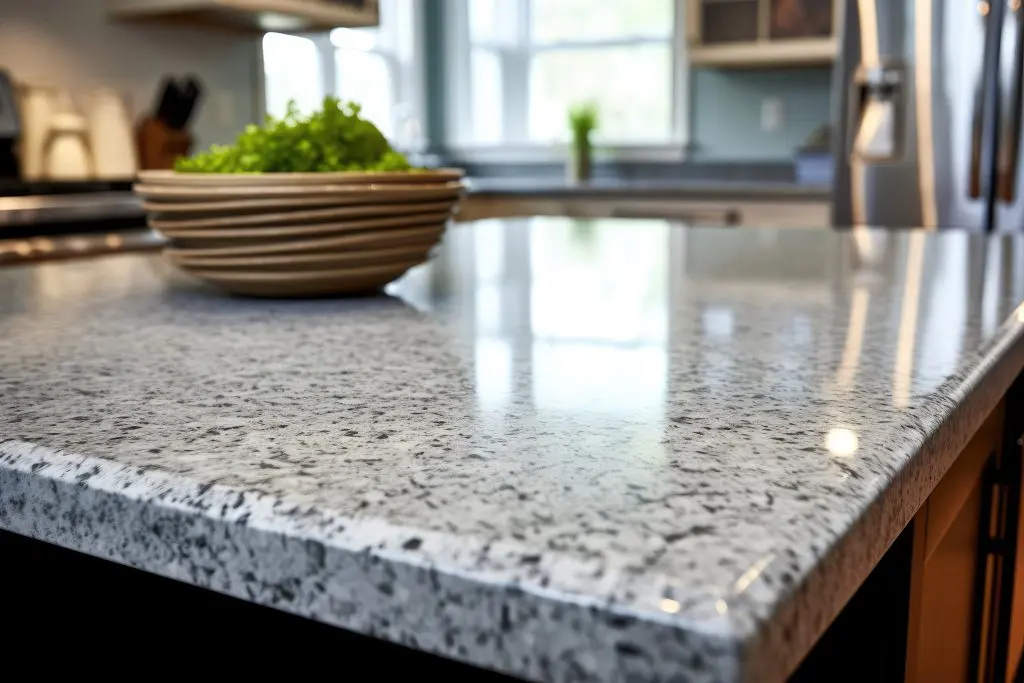
Granite can stain if it is unsealed, poorly sealed, or if spills sit too long. Coffee, oil, wine, tomato sauce, and dark liquids should be wiped up promptly, especially on lighter granite.
This does not mean granite is hard to own. It means homeowners should treat it like natural stone. Fast cleanup and proper sealing prevent most everyday problems.
For homeowners comparing granite stores in Middletown, KY, stain resistance should be part of the conversation before the slab is chosen. A busy household may want a pattern and color that naturally hides daily mess better.
How do granite colors affect maintenance?
Granite colors affect how visible crumbs, dust, water spots, fingerprints, and spills appear. A very dark polished granite may show dust and fingerprints faster, while a heavily patterned granite can hide daily mess better.
Light granite can make a kitchen feel open and bright. Medium-tone granite often gives the best balance between style and practical maintenance.
| Granite style | What it hides well | What to watch |
|---|---|---|
| Light granite | Brightens kitchens | Some stains may show faster |
| Medium speckled granite | Crumbs and daily mess | Pattern should match cabinets |
| Dark polished granite | Strong contrast | Dust and fingerprints may show |
| Leathered granite | Smudges and texture variation | Needs proper cleaning |
| White granite | Soft, updated look | Sealing and spill cleanup matter |
The best granite color is the one that works with both the kitchen design and the homeowner’s cleaning habits.
Do cabinets need to be ready before granite installation?
Yes, cabinets must be installed, level, secure, and strong enough before granite templating and installation. Granite is heavy and rigid, so the base underneath matters.
Weak cabinets can create stress points. Uneven cabinets can cause gaps, seam issues, or poor countertop support. Sink bases, corners, islands, and overhangs need special attention.
Before template day, cabinets should be fully set, appliances should be confirmed, and sink details should be final.
How are granite seams planned?
Granite seams are planned based on slab size, kitchen layout, pattern movement, sink location, cooktop placement, access, and installation safety. The goal is to place seams where they are structurally sound and visually reasonable.
Large islands, L-shaped kitchens, and long countertop runs often need seam planning. Patterned granite also needs careful layout so the movement looks intentional.
Good seam planning starts before fabrication. Once the slab is cut, major changes are limited.
What affects the price of granite countertops?
The price is affected by the slab, square footage, edge profile, sink and cooktop cutouts, backsplash, seam complexity, delivery, fabrication, and installation. Granite starts from $39 per square foot, quartz starts from $55 per square foot, and marble starts from $75 per square foot.
Homeowners comparing granite stores in Middletown, KY should look at the full estimate, not only the material price. A cheaper slab can still become more expensive if the project has complex fabrication or installation needs.
Common price factors include:
- Countertop square footage
- Selected stone
- Edge profile
- Sink cutout
- Cooktop cutout
- Backsplash choice
- Seam layout
- Delivery access
- Fabrication details
- Installation complexity
A clear estimate should explain what is included.
How long does granite countertop installation take?
Most granite countertop projects take about 7–10 days from template to installation once the material is selected and cabinets are ready. The exact timing can change based on slab availability, project size, fabrication details, and delivery scheduling.
The process usually includes material selection, templating, fabrication, edge finishing, sink and faucet cutouts, delivery, installation, seam setting, and final review.
Granite Empire of Louisville provides countertop fabrication and installation for granite, quartz, marble, quartzite, and other materials. The project moves more smoothly when the homeowner finalizes sink, faucet, appliance, and edge details before template.
What services should be included in a granite countertop project?
A granite countertop project should include help with material selection, measurement, templating, fabrication, delivery, and installation. Depending on the project, it may also include old countertop removal, backsplash planning, sink cutouts, edge finishing, and seam discussion.
A typical countertop project may include:
- Slab or material selection
- Project measurement
- Template appointment
- Fabrication
- Edge profile work
- Sink and cooktop cutouts
- Delivery
- Installation
- Seam placement and leveling
- Final cleanup and review
At Granite Empire of Louisville, we want homeowners to understand each step before fabrication begins. That helps avoid surprises after the stone is already cut.
What questions should homeowners ask before choosing granite?
Homeowners should ask about slab availability, sealing, seam placement, cabinet readiness, edge profiles, timeline, included services, and how the company handles fabrication and installation. Good questions lead to better decisions.
Before choosing between granite stores in Middletown, KY, ask practical questions:
- Can we view the full slab?
- What is included in the estimate?
- How are seams planned?
- Does this granite need sealing?
- Are our cabinets ready for stone?
- How long will fabrication take?
- Is delivery included?
- Who handles installation?
- What happens if walls are not straight?
- What sink information is needed before template?
The goal is to understand the full project, not just pick a stone name.
What mistakes should homeowners avoid?
Homeowners should avoid choosing granite from a small sample only, ignoring cabinet condition, skipping sealing advice, choosing edge profiles too late, and comparing quotes without checking what is included. These mistakes can cause delays, budget confusion, or disappointment after installation.
Another mistake is choosing a stone that fights the cabinets or flooring. Granite has natural movement, so the slab should be viewed with the full kitchen in mind.
For homeowners visiting granite stores in Middletown, KY, the best choice is usually the slab that fits the home, the budget, the maintenance expectations, and the installation plan.
FAQ
Is granite still a good countertop material?
Yes. Granite is durable, heat-resistant, and practical for kitchens, islands, bathrooms, and remodel projects.
How much does granite start at?
Granite starts from $39 per square foot, depending on the slab and project details.
Does granite need sealing?
Yes. Granite usually needs sealing to help protect against stains and moisture absorption.
Is granite better than quartz?
Granite is usually better for heat resistance, while quartz is lower maintenance because it does not need sealing.
How long does granite installation take?
Most projects take about 7–10 days from template to installation after material selection and cabinet readiness.
Can granite be installed on existing cabinets?
Yes, if the cabinets are level, secure, and strong enough to support the stone.
Should I see the full slab before choosing granite?
Yes. Granite has natural variation, so seeing the full slab is better than relying on a small sample.
Where can Middletown homeowners start?
Granite Empire of Louisville is located in Louisville, KY, and serves nearby communities, including Middletown, KY. We help homeowners compare granite, quartz, marble, quartzite, and other countertop materials while providing fabrication, delivery, and installation for kitchens, bathrooms, islands, vanities, and remodel projects. If you are comparing granite stores in Middletown, KY, our team can help you choose the right slab, understand the timeline, and plan the details before installation begins.