

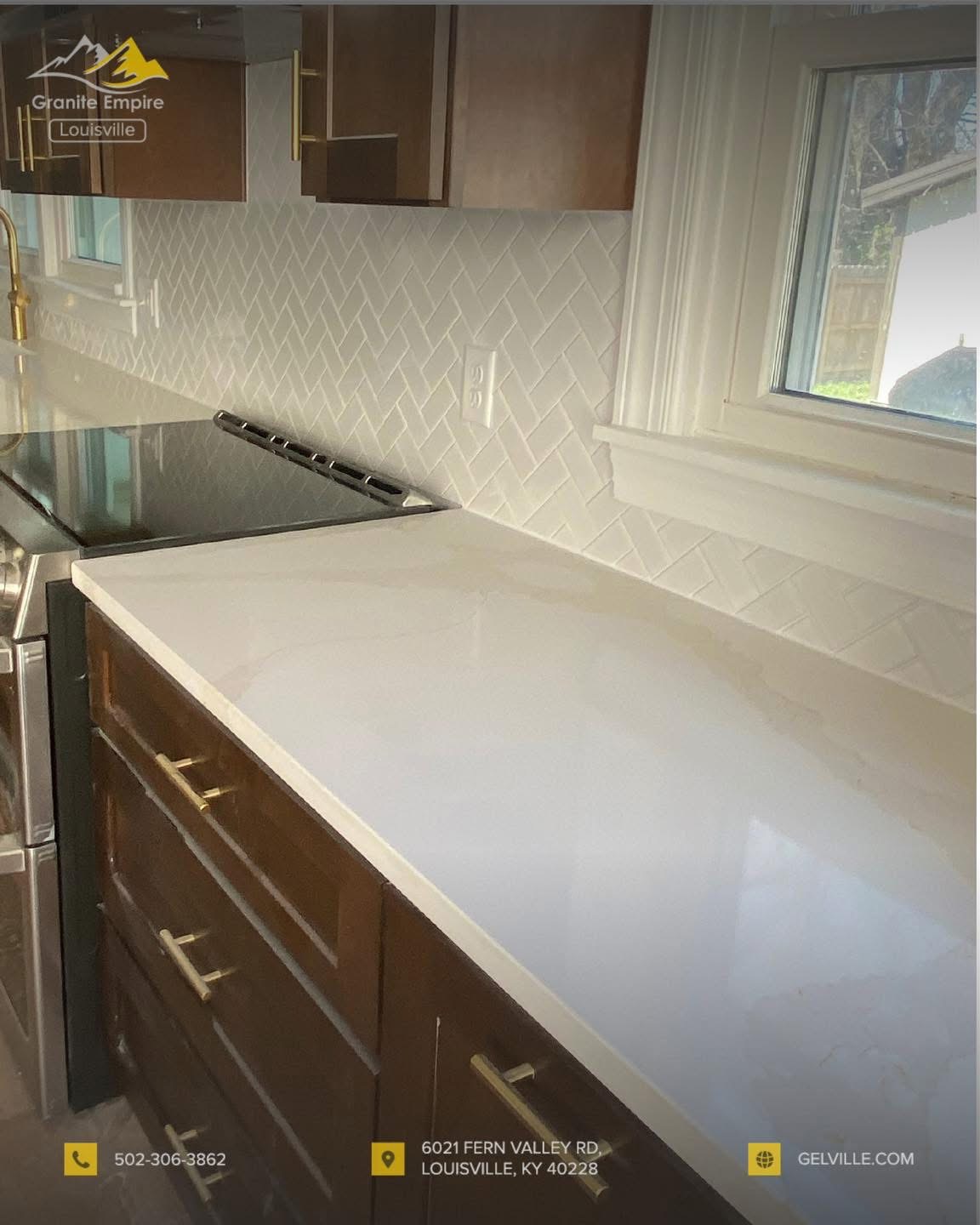
Small appliances are the sneakiest source of countertop wear. Not the dramatic kind—no shattered surfaces, no obvious damage in one big moment. The frustrating kind: faint scuffs that appear right where your coffee maker lives, a cloudy patch under the toaster you swear you never move, a dull outline that looks like a permanent shadow on an otherwise flawless surface.
If you have quartz countertops in Shelbyville, KY, this can feel especially annoying because quartz is marketed as easy living. And it is—until daily friction starts building a quiet history underneath your appliances. The truth is, most scuffs aren’t caused by “bad quartz.” They’re caused by tiny gritty particles, vibration, heat, and micro-movement. An appliance doesn’t have to be dragged across the counter to leave a mark. It only needs to shift a millimeter, a thousand times.
At Granite Empire of Louisville, we talk with homeowners who want their kitchen to look clean and sharp for years, not just on installation day. If you’re choosing quartz countertops in Shelbyville, KY or already living with them, the simplest protection strategy is also the most overlooked: put the right barrier under the appliances you use every day.
This isn’t about turning your kitchen into a padded room. It’s about choosing protection that looks good, cleans easily, and prevents the exact kinds of scuffs that make quartz look “tired” in one zone while the rest of the counter still looks new.

Why Small Appliances Cause Scuffs Even When You Don’t Move Them
Most homeowners assume scuffs come from sliding something heavy. But small appliances create wear in a different way.
First, vibration. Coffee grinders, blenders, stand mixers, even some espresso machines subtly vibrate. That vibration can move dust and grit under the feet of the appliance. Over time, those particles act like fine sandpaper.
Second, trapped crumbs. Under a toaster is a crumb factory. Under a coffee maker is often a fine mix of grounds, sugar dust, and dried droplets. Under an air fryer or toaster oven, you may get a thin film of grease and dust. When those residues sit under appliance feet, any micro-shift can press them into the quartz surface.
Third, heat and moisture cycles. Some appliances vent downward or radiate heat into the countertop surface. Heat can soften certain residues and make them bond more stubbornly. Moisture from dripping coffee, steam, or sink splashes can reactivate old residue and create a sticky layer that holds grit.
This is why homeowners with quartz countertops in Shelbyville, KY sometimes discover scuffs under appliances they barely touch. The appliance didn’t “scratch” the quartz. The grit underneath did—slowly, invisibly, predictably.
At Granite Empire of Louisville, we build countertop recommendations around real life, and real life includes a coffee station that runs every morning and a toaster that lives in one spot for years.
The Wrong Solutions: What People Put Under Appliances That Backfires
Before we talk about what works, it helps to call out what often doesn’t.
Rubber mats can sometimes leave marks, especially if they’re low-quality, heavily dyed, or exposed to heat. Over time, rubber can transfer color or create a tacky outline, especially in sunny spots. Felt pads on appliance feet can trap grime and become abrasive when they collect grit. Paper towels and cloth towels under appliances sound clever, but they hold moisture, collect crumbs, and can create a grimy patch that stains or dulls the surface.
Even “protective” shelf liners can backfire because they trap moisture and residue underneath. You lift the appliance later and find a rectangular shadow, not because the quartz is damaged, but because everything under that liner became a humid micro-environment.
If you’re protecting quartz countertops in Shelbyville, KY, the best barrier is stable, easy to clean, heat-aware, and non-transfer. In other words: it protects without creating a new problem.
At Granite Empire of Louisville, we recommend solutions that keep the countertop looking like quartz—not like a science experiment.
The Best Options: What to Put Under Small Appliances
The “right” barrier depends on the appliance and where it lives. But in most kitchens, a few options consistently work well.
A tray with a hard base is one of the smartest choices for coffee stations and espresso machines. It catches drips, contains grounds, and prevents constant moisture from reaching the quartz surface. A tray also makes cleaning easier because you can lift and wipe underneath without moving the appliance itself daily. This is especially useful for homeowners with quartz countertops in Shelbyville, KY who want the counter to stay pristine around the busiest morning zone.
A thin silicone appliance mat designed for heat and countertops can work well under air fryers and toaster ovens—if it’s the right quality. The key is using a mat specifically rated for heat and countertop contact, not a generic baking mat or cheap liner. It should be stable, easy to wipe, and not prone to dye transfer. Under hot appliances, the barrier’s job isn’t just scuff prevention—it’s also helping manage heat exposure and keeping greasy residue from baking onto the quartz.
A cutting-board style base is another practical option. A small wood or composite board under a blender, mixer, or toaster creates a clean lift-off surface that’s easy to remove and wipe under. It also looks intentional, not improvised. This method is especially popular in American kitchens because it doubles as a “station” concept: coffee station, smoothie station, baking station.
Felt-backed sliders can be useful for appliances you move often, but only if they’re cleaned regularly. They reduce friction when you slide the appliance, but they can also collect grit. If you choose this route, the key is maintenance: occasionally lift, wipe the underside, and remove trapped debris. The goal is to prevent scuffs, not relocate grit.
At Granite Empire of Louisville, we help homeowners think in zones rather than products. The best protection is the one that fits how you actually use the kitchen, because the best habit is the habit you’ll keep.

Appliance-by-Appliance: What Works Best Where
Coffee makers and espresso machines are best paired with trays. They drip, they splash, and they’re rarely moved. A tray turns a messy zone into a contained one. On quartz countertops in Shelbyville, KY, this can prevent not only scuffs but also the “mystery dull patch” that forms from repeated coffee residue.
Toasters do well on a base that helps manage crumbs. A board or tray works better than soft liners because crumbs get trapped in fabric-like materials. A rigid base lets you lift, shake out crumbs, wipe clean, and put it back.
Blenders and mixers create vibration. A stable board works well, as do high-quality mats that don’t shift. The goal is preventing micro-movement from grinding grit into the surface.
Air fryers and toaster ovens require heat awareness. A heat-rated mat or a stable heat-safe base is important, particularly if the appliance vents downward or sits close to the counter. Quartz can handle normal kitchen heat, but it doesn’t benefit from repeated concentrated heat in the same small footprint. A protective layer can help reduce direct contact with heat and prevent greasy residue from bonding to the surface.
And for appliances near the sink—soap dispensers, bottle warmers, anything that’s constantly in splash range—choose a tray or base that you can lift and dry under. Water plus residue is the fastest way to make a countertop look permanently “used.”
If you’re investing in quartz countertops in Shelbyville, KY, these small decisions keep the counter looking consistent across the whole kitchen—not pristine in one zone and scuffed in another.
At Granite Empire of Louisville, we love these practical fixes because they don’t ask you to live differently. They simply ask you to protect the zones where friction happens.
The Maintenance Secret: Lift and Reset the Station Occasionally
Even the best barrier needs occasional attention. The biggest mistake homeowners make is putting something under the appliance and never lifting it again. That’s how moisture and residue get trapped, and that’s how “protection” becomes a source of grime.
A simple, realistic routine is to lift each station once a week or once every two weeks, wipe the countertop underneath, wipe the tray or mat, and put it back. This takes minutes. It prevents buildup. It ensures grit never becomes permanent scuffing.
If you’re maintaining quartz countertops in Shelbyville, KY, this is the difference between a countertop that looks “new” in five years and one that looks like it has permanent outlines under every appliance.
At Granite Empire of Louisville, we call it a reset, not a deep clean. It’s a quick maintenance habit that keeps your protection actually protective.
What If You Already Have Scuffs?
If you’ve already noticed scuffs under appliances, don’t panic. Many marks on quartz are not deep scratches. They’re often metal transfer, residue buildup, or micro-scuffing that can be improved with the right approach.
Start by removing the appliance and cleaning the area gently. Avoid abrasive pads and harsh powders—those can worsen the finish. Often, a mild cleaner and a microfiber cloth can remove the residue that’s making the surface look scuffed. If the mark persists, it may be a true scuff in the surface sheen, and you’ll want a surface-appropriate solution rather than experimenting with random cleaners.
The bigger goal is prevention going forward. Choose a barrier that suits the appliance, keep it clean, and stop the micro-movement cycle that created the mark.
Homeowners who invest in quartz countertops in Shelbyville, KY usually love quartz for its consistent look. The key is protecting that consistency in the zones where appliances live.
At Granite Empire of Louisville, we help homeowners choose countertops that fit their life—and we help them keep those countertops looking sharp long after installation.

Protecting Quartz Without Overthinking It
The best countertop protection strategies feel effortless. A tray under the coffee station. A stable base under the toaster. A heat-rated mat under the air fryer. Occasional lifting and wiping. These are small moves, but they prevent the exact kind of wear that makes quartz feel “high maintenance” even when it isn’t.
If you’re choosing quartz countertops in Shelbyville, KY, think of small appliances as long-term residents. Give them a foundation that protects the surface, contains the mess, and keeps your quartz looking smooth and polished where you see it most.
That’s the approach we recommend at Granite Empire of Louisville—because the difference between a countertop that stays beautiful and one that looks tired is rarely one big mistake. It’s usually the tiny daily friction you never noticed… until you lifted the coffee maker.