

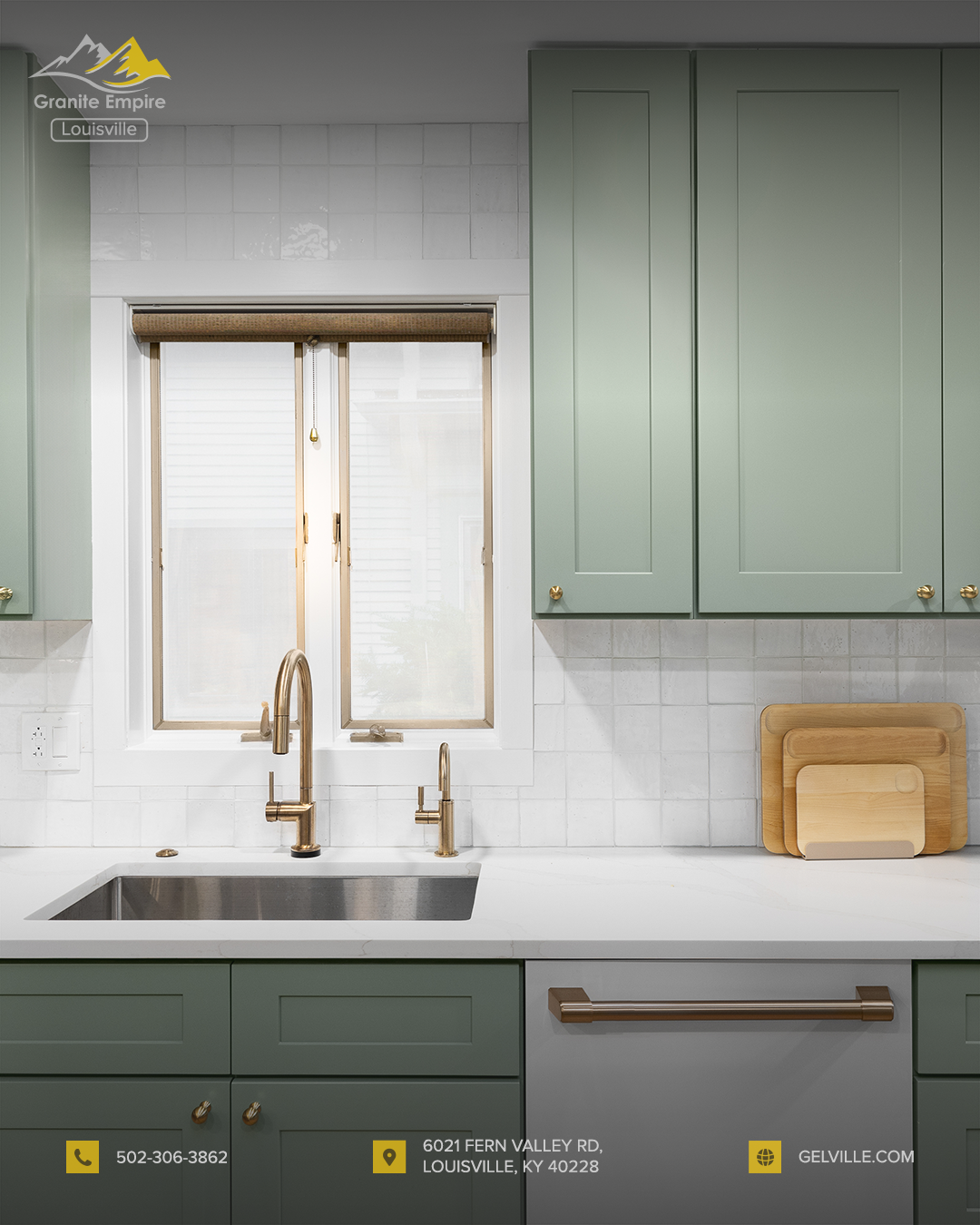
There’s a moment in almost every kitchen remodel when the homeowner asks a question that sounds simple but has expensive consequences: “Should we install the backsplash before the countertops?” The assumption behind the question is understandable. People want progress. They want the kitchen to look finished. They’re trying to coordinate contractors, avoid delays, and keep the project moving. And because backsplash tile looks like a surface detail—not a structural decision—it’s easy to treat timing like a minor scheduling preference.
But countertop installers will tell you something different: backsplash timing can affect the fit, the finish, and the long-term look of your kitchen. In some situations, waiting isn’t just recommended—it’s protective. It can save your countertop edge from chips, prevent ugly gaps, reduce excessive caulk lines, and help the entire project look cleaner when it’s done.
At Granite Empire of Louisville, we work with homeowners who are comparing granite stores in Okolona, KY and planning renovations where every decision connects to the next. One of the biggest “quiet” differences between a kitchen that looks professionally finished and one that looks slightly improvised is this: the order of operations between countertops and backsplash.
If you’ve ever seen a backsplash that looks like it was “patched” into place, or a countertop line that feels wavy, or a caulk seam that draws your eye for the wrong reasons, there’s a good chance the timing was off.

Why Countertop Installers Usually Want the Countertops First
Countertops are the reference line. Everything else visually anchors to them. When countertops go in first, installers can set them precisely, verify level and support, and ensure the stone sits correctly on the cabinets. Once that line is established, backsplash tile can be installed to meet the countertop cleanly, with minimal gaps and a more consistent finish.
When tile is installed first, it can create a rigid wall line that the countertop must fit against. Real kitchens aren’t perfect rectangles. Walls bow. Corners aren’t perfectly square. Cabinets shift slightly. If a backsplash is already installed, the countertop has less room to be adjusted for real-world conditions. Installers may be forced to “make it work,” and that’s when the finish suffers.
Homeowners shopping at granite stores in Okolona, KY often focus on color and pattern. But the cleanest kitchens—the ones that look truly high-end—usually come from sequencing decisions that protect the stone and simplify the final fit.
That’s why Granite Empire of Louisville typically recommends installing countertops before backsplash unless there’s a specific reason to do it differently.
The Biggest Hidden Issue: Tile Isn’t Always Flat
Backsplash tile looks smooth when you stand back. Up close, it can have tiny height variations. Even well-installed tile can have slight lippage—small differences in tile thickness or alignment. Textured tile, handmade-look ceramic, zellige-style pieces, and even some stone mosaics are intentionally uneven. That unevenness is part of the charm, but it creates a problem if you try to slide a countertop into that surface.
If the countertop is forced against uneven tile, pressure points can occur. Those pressure points can lead to chips at the edge, a stressed fit, or a countertop that sits slightly off because it’s being pushed by the tile. Even when nothing breaks immediately, the install can end up with a larger caulk line to hide inconsistencies, which is one of the most common “why does this look sloppy?” complaints in finished kitchens.
If you’re choosing among granite stores in Okolona, KY, you want your stone to look crisp and intentional. Waiting on backsplash until after the countertop is installed helps the tile be fitted to the stone instead of the stone being forced into the tile.
At Granite Empire of Louisville, we consider this one of the simplest ways to protect the countertop finish and improve the visual outcome.
Caulk Lines Tell the Truth About Timing
Nothing reveals bad sequencing faster than caulk.
When backsplash is installed after countertops, the gap between tile and stone can be small and consistent. Caulk becomes nearly invisible. It functions as a flexible seal, not a visual band.
When tile is installed first and the countertop is fitted afterward, the gap can vary. One area may touch. Another may have a noticeable space. Installers often compensate with caulk. Too much caulk draws the eye, collects grime over time, and can discolor. It’s also more likely to crack or peel because thicker caulk sections move differently.
A kitchen can have beautiful materials and still look “off” if the caulk lines are heavy and uneven. Homeowners often blame the tile, the countertop, or the installer. In many cases, the real culprit is the order of operations.
At Granite Empire of Louisville, we help clients shopping at granite stores in Okolona, KY avoid this problem by planning the timeline around the surfaces that set the reference line—countertops first, backsplash second.
Why Waiting Protects the Stone’s Edge and Finish
Countertop edges are the most vulnerable part of the surface. Not because granite is weak, but because edges are where impact, pressure, and stress concentrate. When a countertop is installed, installers need clean access to set, level, and align the stone properly. If the backsplash is already installed, that access is reduced. The stone may be bumped during placement. The edge may be pressed against tile. The risk of minor chipping increases.
Even without chipping, the finish can suffer. Granite edges can pick up tiny scuffs or abrasions if they’re dragged against a rough tile edge. It’s not always visible immediately, but under certain light it can appear as faint wear—exactly the kind of detail that makes homeowners feel like their “new” countertop already looks used.
If you’re investing through granite stores in Okolona, KY, you want the countertop to look pristine at the finish line. Waiting on backsplash is one of those simple choices that protects the finish without adding complexity.
That’s why Granite Empire of Louisville often frames it this way: you’re not delaying the backsplash. You’re protecting the stone.
The Real-World Contractor Problem: Everyone’s Schedule vs One Clean Result
Homeowners don’t choose odd sequencing because they want problems. They choose it because schedules are chaotic. A tile installer is available today. The countertop template is next week. The cabinets are already in. People try to keep momentum.
But the kitchen isn’t a set of separate tasks. It’s a chain. And countertops are one of the few links that can’t be “adjusted” easily after the fact. Once stone is cut and installed, you can’t shift it to accommodate a backsplash line. You can only caulk, trim, or patch. Those fixes are cosmetic, and they rarely look as clean as proper sequencing.
This is why professionals at reliable granite stores in Okolona, KY encourage homeowners to coordinate the timeline around templating and installation. It prevents the domino effect of small compromises that end up visible in the final kitchen.
At Granite Empire of Louisville, we’ve seen how a rushed timeline can create a kitchen that looks almost right—but not quite. Timing is one of the easiest ways to keep “almost” from happening.
The Exception: When Backsplash First Can Make Sense
There are a few cases where backsplash installation before countertops can be reasonable. For example, if you’re doing a full-height backsplash behind the range and the countertop material is exceptionally sensitive to certain installation conditions, or if a specific design requires tile to dictate alignment. But these are exceptions, not the norm, and they require careful coordination between the tile installer and countertop team.
Even in those cases, the goal is still the same: avoid forcing the countertop against uneven or imperfect tile, and ensure the final gap is clean and consistent.
Homeowners comparing granite stores in Okolona, KY should ask a simple question: “In my kitchen, does backsplash-first help or hurt the final finish?” A professional company should be able to answer based on your tile choice, wall condition, and countertop layout—not based on convenience.
Granite Empire of Louisville treats these cases individually because the best guidance depends on the actual site conditions, not generic rules.
The Best Sequence for a Clean, Professional Finish
If you want the simplest path to a kitchen that looks truly finished, here’s the sequence most pros prefer:
Cabinets installed and fully secured
Countertops templated after cabinets are final
Countertops fabricated and installed
Backsplash installed to meet the countertop cleanly
Final caulk line and finishing touches
This order supports a tighter fit, cleaner lines, and less risk to the stone during installation. It also reduces the chance of last-minute “patch” solutions that always look like patch solutions.
This is the approach Granite Empire of Louisville recommends for most projects because it leads to the most consistent results—especially for homeowners shopping at granite stores in Okolona, KY who want a kitchen that looks high-end without needing excuses.

Waiting Doesn’t Slow the Project—It Protects the Result
Backsplash timing isn’t about patience for its own sake. It’s about protecting the countertop finish, simplifying the final fit, and avoiding the cosmetic compromises that show up later as uneven caulk lines, chipped edges, and awkward gaps.
If you’re planning a remodel and comparing granite stores in Okolona, KY, remember this: the countertop sets the line your eye follows. When that line is clean, everything else looks better. When that line is compromised, the kitchen never quite feels finished.
That’s why countertop installers so often recommend waiting. Not because they want to delay your backsplash, but because they want your stone to look as good at month twelve as it did on day one.
At Granite Empire of Louisville, we believe the best kitchens are built in the right order, not just the fastest order. And when you let the countertop lead, the backsplash can be installed with the precision that makes the entire space feel intentional.