

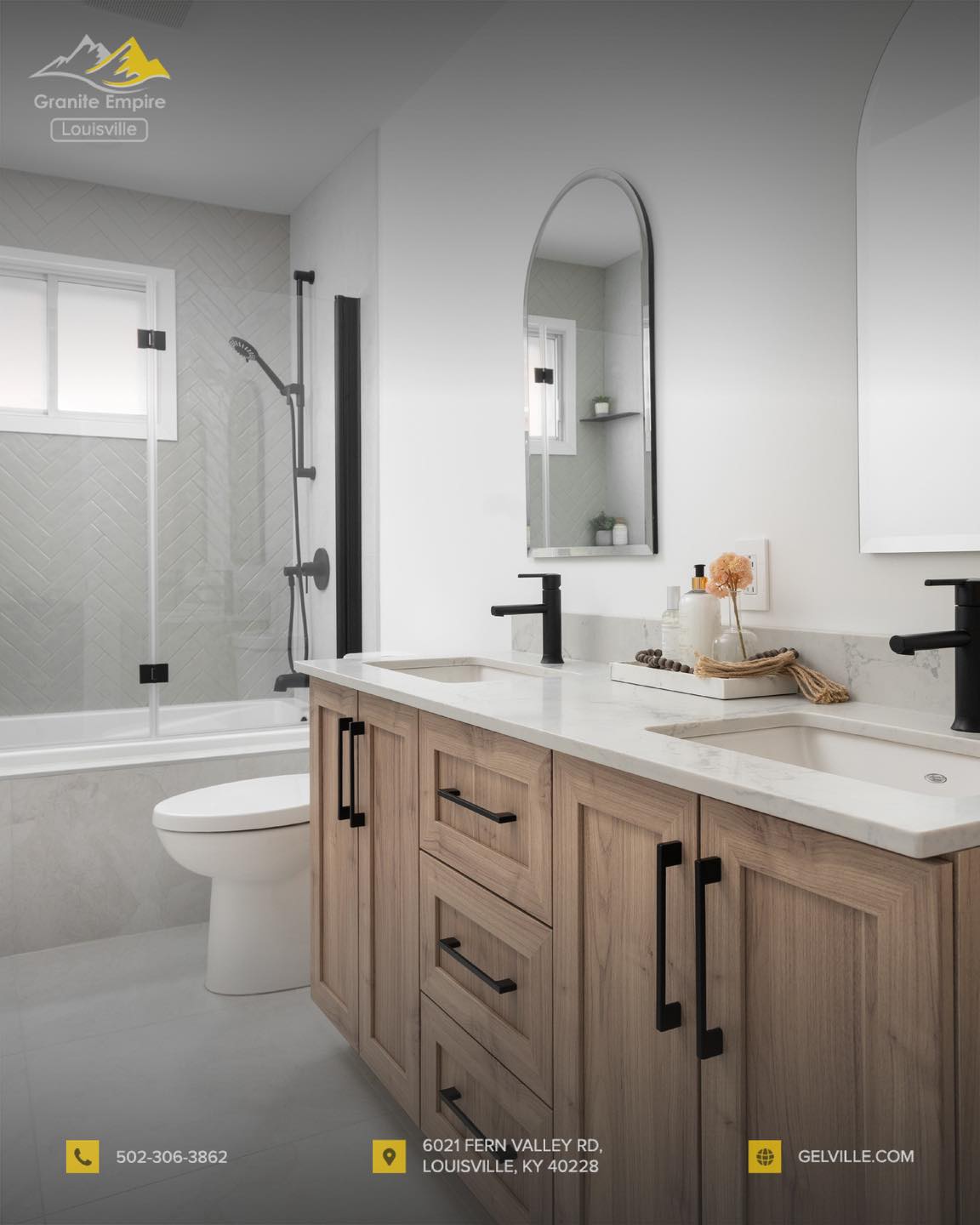
Water spots are the most irritating kind of “mess” because they show up when you’ve already cleaned. You can wipe the vanity top, step back feeling accomplished, and then—under the mirror lights—those speckles appear again like they never left. Sometimes they look like tiny white dots. Sometimes they’re cloudy rings around the faucet base. Sometimes the surface just looks faintly streaky, as if the countertop can’t decide whether it’s clean or not.
If you have bathroom countertops in Okolona, KY, you’re not alone in this. Water spots are one of the most common homeowner complaints in bathrooms, and the reason is almost never “you’re doing it wrong.” It’s that bathrooms create the perfect conditions for water spots to keep returning: hard water minerals, soap residue, inconsistent drying, and lighting that highlights every micro-mark.
At Granite Empire of Louisville, we hear this question constantly: “Why does it still look spotted even after I wipe it?” The answer is surprisingly simple—and once you understand it, the fix becomes practical, not exhausting. You don’t need harsher cleaners. You don’t need to scrub harder. You need to break the water-spot cycle where it actually starts.
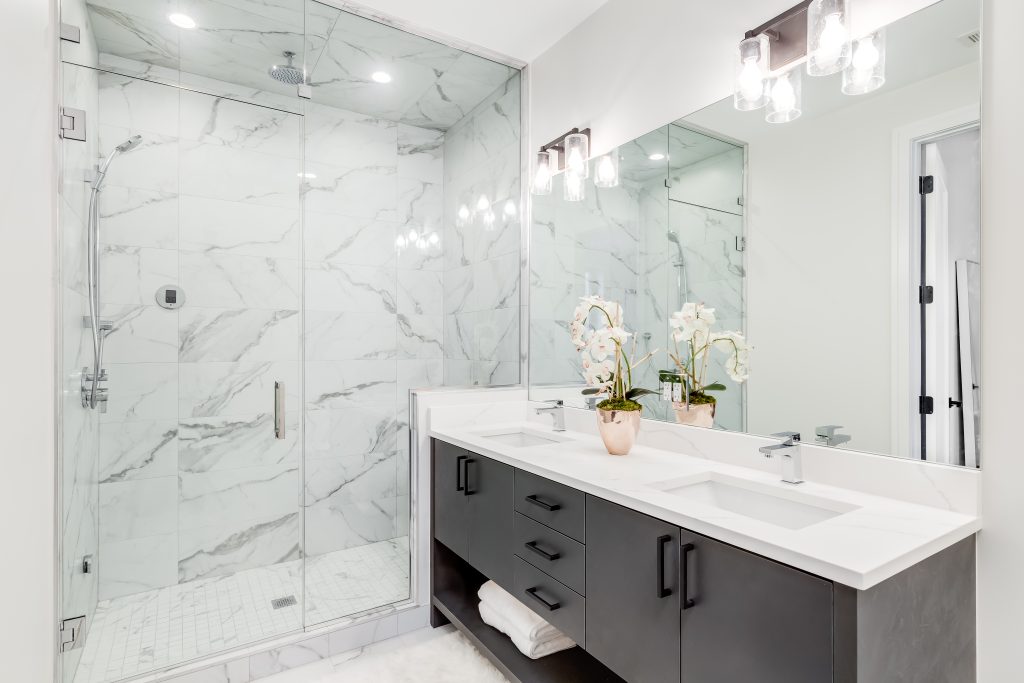
Water Spots Aren’t Dirt—They’re What Water Leaves Behind
The biggest misunderstanding about water spots is thinking they’re grime. Most water spots are mineral deposits. When water evaporates, minerals like calcium and magnesium remain on the surface. That residue dries into a spot, a ring, or a hazy film. You didn’t “miss a dirty patch.” The spot formed after you cleaned—because the water you used, or the water that splashed afterward, dried on the countertop.
Bathrooms are especially prone to this because water is constantly landing in the same few zones: around the faucet base, behind the handles, near the sink rim, and where people set wet items like toothbrush cups or soap bottles. Even if you wipe the surface, a thin layer of moisture can remain in crevices or under objects and then dry into deposits.
This is why homeowners with bathroom countertops in Okolona, KY often feel like the countertop is fighting them. It’s not. It’s reacting to the environment.
At Granite Empire of Louisville, we like to explain it in one sentence: if water dries on the surface, it leaves a signature.
The Real Culprit: The “Wipe” That Spreads Instead of Removes
Here’s the habit that keeps water spots alive: wiping with a damp cloth and walking away.
A damp wipe can remove visible droplets, but it can also spread minerals and soap residue into a thin film. The countertop looks clean for a minute. Then the film dries, and the spots “return.” They didn’t return. They formed.
This is especially common in bathrooms because people wipe quickly while rushing out the door. They use whatever towel is nearby. They swipe once, and the surface looks better. But the wipe isn’t finishing the job. It’s redistributing the minerals that will become visible again under light.
If you’re trying to keep bathroom countertops in Okolona, KY looking spot-free, the most important step is not wiping. It’s drying. Drying removes water before it evaporates. That’s the entire difference between “clean now, spotted later” and “clean and stays clean.”
Mirror Lighting Makes Everything Look Worse (And That’s Not Your Fault)
Many bathrooms now have LED mirror lights, sconces, or bright overhead lighting that hits the vanity top at an angle. That kind of light is great for makeup and shaving, but it’s brutal for surfaces. It highlights every streak and every residue patch because it creates strong reflections and sharp shadows.
So a countertop that looks fine in normal daylight can suddenly look spotted at night under mirror lights. People interpret this as a cleanliness problem. It’s often a lighting problem revealing residue you didn’t realize was there.
This matters for anyone choosing bathroom countertops in Okolona, KY. Certain finishes and colors will show water spots more in strong directional lighting. Dark glossy surfaces can show speckling and streaks more easily. Very light matte surfaces can show hazy patches more easily. Neither is wrong; it just means the cleaning method needs to match the lighting reality.
At Granite Empire of Louisville, we often tell homeowners to evaluate vanity tops the way they’ll actually be seen: under their bathroom lighting, not under showroom lights.
Soap Film Is the Silent Partner of Water Spots
If mineral deposits are the “spot,” soap film is the glue that makes it stick.
Hand soap, body wash, lotion, toothpaste, and even certain cleaners create a thin film that builds up around sinks. When water splashes, minerals bind to that film more easily. Over time, the surface can look cloudy even if you wipe daily, because you’re wiping the top layer but leaving a residue base behind.
This is why faucet rings are so common. The area around the faucet base stays damp, collects soap residue, and dries repeatedly. Each cycle adds a little more buildup until the ring becomes visible and stubborn.
For homeowners with bathroom countertops in Okolona, KY, this is a key shift: you’re not only fighting water spots. You’re fighting the combination of water plus residue.
At Granite Empire of Louisville, we recommend periodic “reset cleaning” of the sink zone—clearing bottles, cleaning the area thoroughly, then rinsing and drying—because it breaks that base layer that keeps re-forming spots.
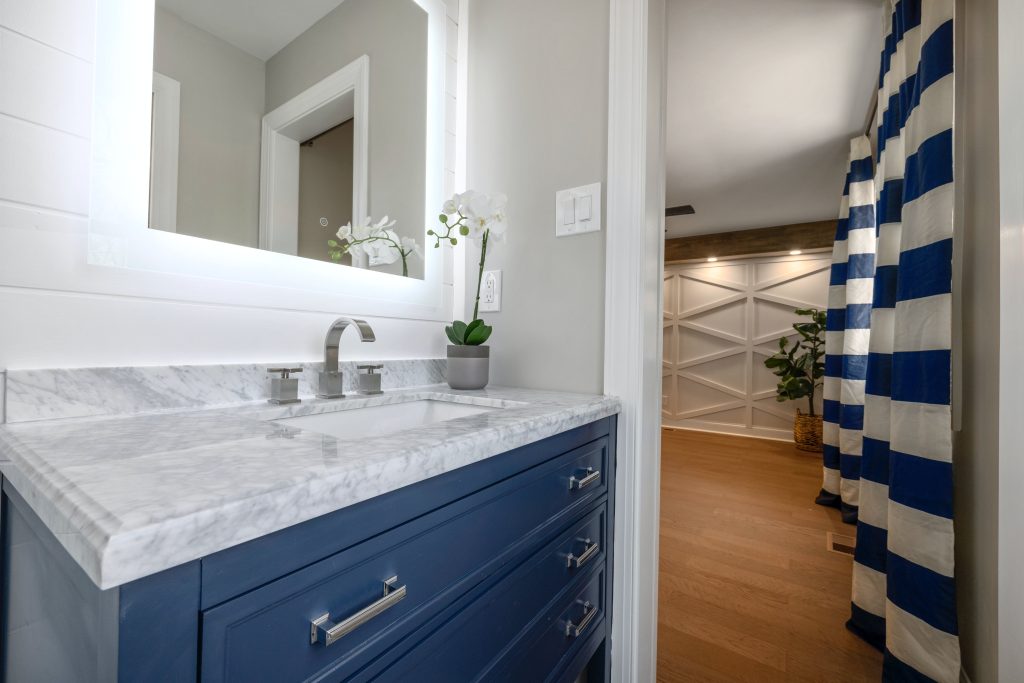
Hard Water: The Spot Multiplier You Can’t See Until It Dries
Hard water is a major factor in water spots, and it’s extremely common. You might not notice it while the water is still wet. You notice it once it evaporates and leaves minerals behind.
If your home has hard water, you’ll see more white speckles and chalky rings. You may also see buildup at the faucet base and near the drain area. The solution isn’t to scrub harder. It’s to reduce dry-down time and reduce residue buildup that minerals cling to.
This is why the simplest anti-spot habit for bathroom countertops in Okolona, KY is the “final dry.” A microfiber cloth used to dry the sink zone after heavy use can cut spotting dramatically, even if the water itself is hard.
At Granite Empire of Louisville, we often recommend treating the sink area like a glass shower door: if you dry it, it stays clearer. If you let it air dry, minerals win.
What You Should Do Instead: The Two-Step Clean That Works
If you want a practical routine that actually works, it’s this:
First: wipe to remove residue. Use a gentle cleaner appropriate for your surface, or warm water with a small amount of mild soap.
Second: rinse and dry. Wipe with clean water to remove leftover cleaner and minerals, then dry with a microfiber cloth.
That second step—rinse and dry—is what most people skip, and it’s what makes water spots “keep coming back.”
This method matters because many sprays leave their own residue. If you spray and wipe without rinsing, you can create a film that attracts minerals and makes streaks more visible. If you rinse and dry, you remove the film and the minerals before they settle.
Homeowners who follow this routine with bathroom countertops in Okolona, KY often notice the difference within a week, especially around the faucet base.
At Granite Empire of Louisville, we like this routine because it’s realistic. It doesn’t require expensive products. It requires a better finish step.
The Bottle Clutter Problem: Why Spots Keep Forming in the Same Places
Look at what lives on your vanity top: soap dispensers, toothbrush holders, cups, skincare bottles. Those items trap moisture underneath and around them. Water can’t evaporate evenly, so it dries in patches and leaves deposits in exactly the same shapes again and again.
That’s why you can wipe the counter and still see spots later: the water was hiding under something.
If you want bathroom countertops in Okolona, KY to look cleaner with less effort, reduce the number of items sitting directly on the surface or place them on a tray that can be lifted and wiped under easily. It’s not about minimalism. It’s about airflow and access.
At Granite Empire of Louisville, we often suggest a simple “lift and wipe” habit: once or twice a week, clear the sink zone fully, clean it properly, rinse and dry, then put items back. That small reset prevents the stubborn rings and speckles that daily quick wipes never fully address.
What Not to Do: The Cleaning Moves That Create More Spots
There are a few common cleaning habits that make spotting worse, even though they feel productive.
Using glass cleaner or strong disinfectants daily can leave a film that streaks under light. Scrubbing with abrasive pads can dull certain finishes, making the surface reflect unevenly and look permanently hazy. Using acidic cleaners can damage some stone finishes and create dull patches that mimic water spots.
The goal isn’t to be afraid of cleaning. The goal is to avoid turning the surface into a residue magnet.
If you have bathroom countertops in Okolona, KY, the best strategy is gentle daily care and occasional deeper resets, not constant escalation to stronger products.
At Granite Empire of Louisville, we always prefer low-drama maintenance because it protects both the countertop and the homeowner’s sanity.

Water Spots Are a Pattern—And Patterns Can Be Changed
Water spots keep coming back because the same conditions keep repeating: water lands, residue is present, the surface dries on its own, and light reveals the deposits. Once you understand that sequence, you stop blaming the countertop and start controlling the variables.
Dry the sink zone instead of just wiping it.
Rinse off cleaner residue instead of leaving it behind.
Reduce moisture traps under bottles.
Use a microfiber cloth as your finishing tool.
Those are realistic habits. They don’t require perfection. They simply interrupt the moment when water turns into a spot.
At Granite Empire of Louisville, we help homeowners choose and maintain bathroom countertops in Okolona, KYwith real-life guidance, because the best countertop isn’t the one you can’t use. It’s the one that stays beautiful in the room you use the most, without feeling like a daily battle.