

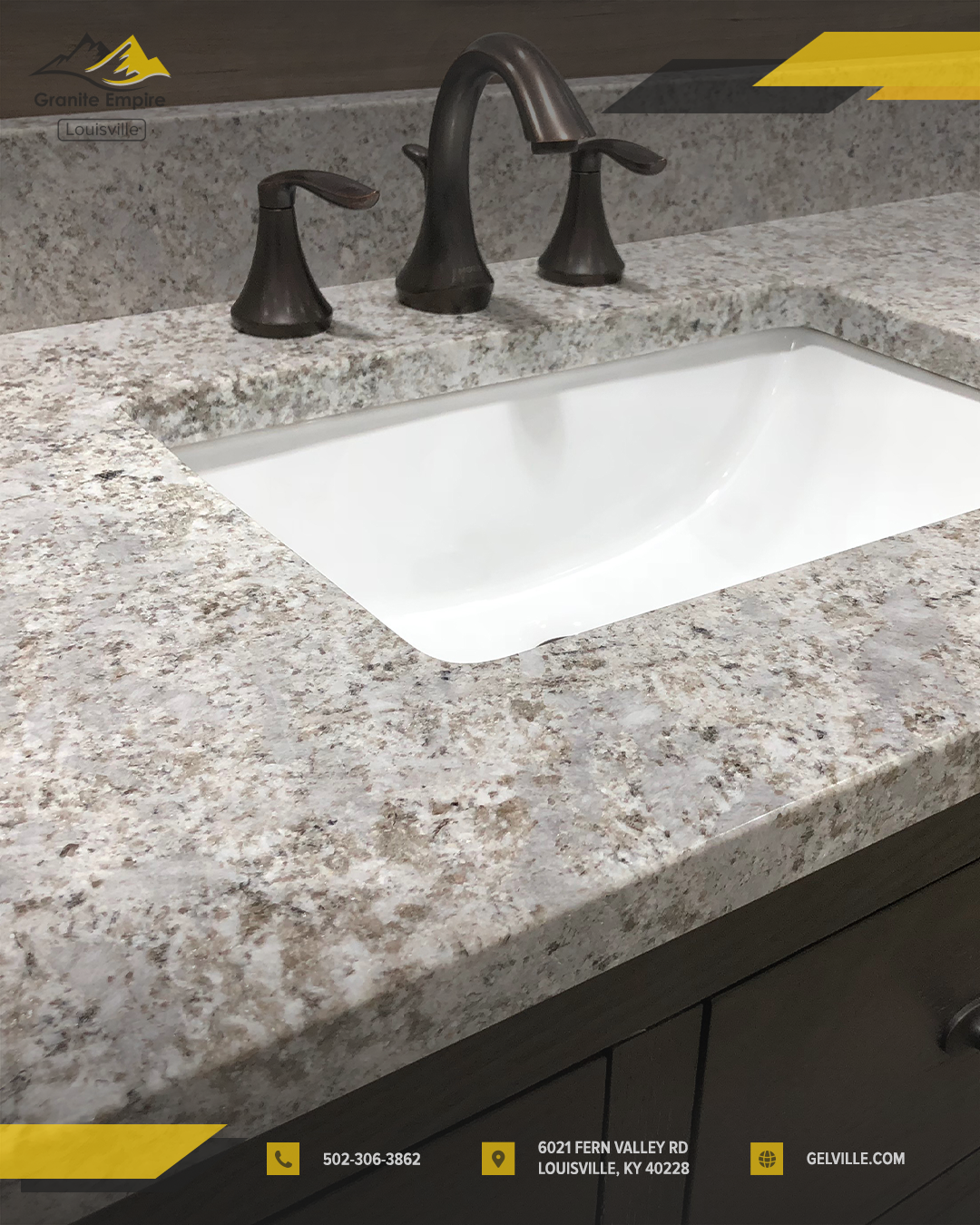
Granite thickness sounds like one of those decisions you make quickly—something technical that doesn’t really affect the “feel” of your kitchen. Then you see two slabs side by side. One looks sleek and tailored. The other looks substantial, almost architectural. Suddenly thickness isn’t just a number. It’s a visual statement, a durability conversation, a budget consideration, and—if we’re being honest—a decision that influences how confident you feel every time you set down a heavy pot.
Homeowners often walk into showrooms expecting to choose a color and leave. But at Granite Empire of Louisville, we’ve noticed that the thickness question comes up the moment people start imagining the countertop in their own space. If you’re comparing granite stores in Highview, KY, you’ll hear a lot of quick opinions. “Always go 3cm.” “2cm is fine.” “3cm is stronger.” “2cm looks modern.” The truth is more nuanced, and it depends on what you want your kitchen to look like, how it’s built, and how you live in it.
Thickness is not a status symbol. It’s a design and structural choice. When you understand where it matters and where it doesn’t, the decision becomes easy—and you stop paying for things you don’t need or skipping things you actually do.
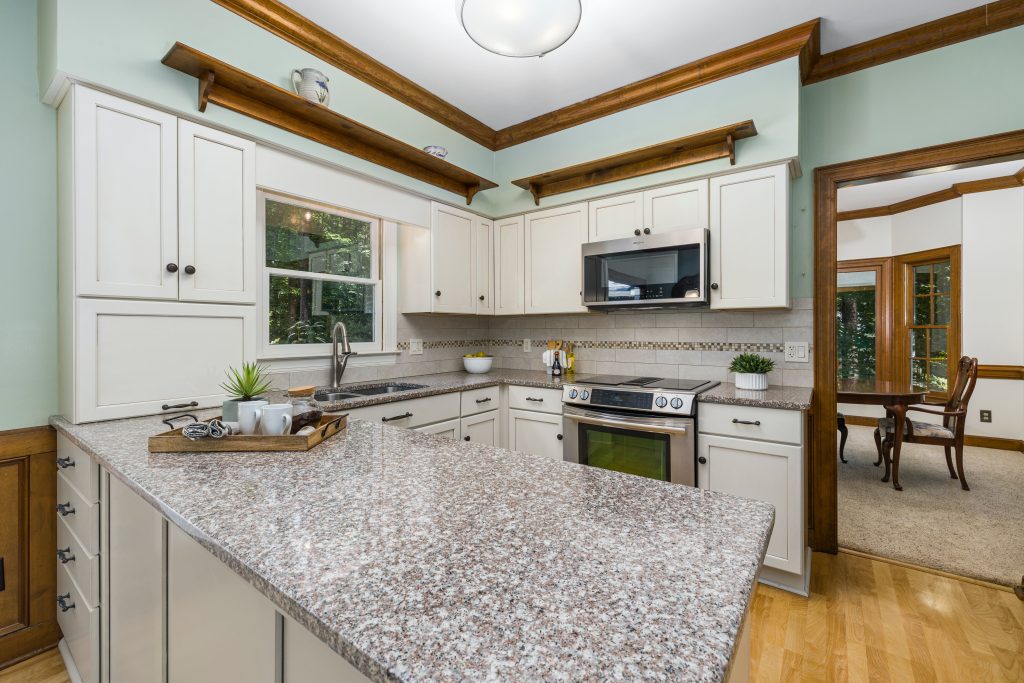
What 2cm and 3cm Really Mean in Real Kitchens
Let’s translate the numbers into reality. A 2cm slab is thinner and typically requires a bit more attention in how it’s supported and finished. Many homeowners love it for its clean profile and slightly lighter visual footprint. In the right kitchen, it looks refined and intentional.
A 3cm slab is thicker and naturally feels more substantial. It’s often chosen because it looks bold, feels solid, and can simplify certain installation details. In many homes, it also creates the “luxury stone” look people want without needing extra design tricks.
But here’s the key: thickness alone doesn’t guarantee quality. Quality comes from the entire system—stone selection, fabrication, seam planning, cutout finishing, and installation. The best granite stores in Highview, KY won’t push you into a thickness by default. They’ll ask what you’re building and why.
At Granite Empire of Louisville, we guide clients toward the thickness that fits their kitchen’s proportions, cabinetry, and goals—because the right choice is the one you’ll love every day.
When 2cm Is More Than Enough
2cm granite can be an excellent choice when the kitchen design benefits from a lighter, cleaner profile. It’s especially appealing in more modern interiors where thick, heavy edges can feel visually bulky.
One of the best scenarios for 2cm is a kitchen with a strong design framework already in place: clean cabinetry lines, thoughtful hardware, and a backsplash that supports the stone rather than competing with it. In these kitchens, 2cm reads as tailored. It can make the countertop look sleek rather than heavy.
Another scenario: when you want a thicker look without the full weight of 3cm. Many fabrication approaches allow for edge detailing that creates the appearance of a thicker slab while keeping the actual stone thickness at 2cm. That can deliver the look you want while managing cost and design direction.
2cm can also work beautifully when overhangs are modest and the countertop layout doesn’t involve extreme spans. If your kitchen is straightforward—standard runs, properly supported areas, no dramatic cantilevers—2cm often performs very well.
If you’re visiting granite stores in Highview, KY, and you like a crisp, modern profile, don’t let anyone tell you 2cm is automatically “lesser.” In the right kitchen, it’s the smarter design choice.
When 3cm Actually Matters
Now let’s talk about the moments where 3cm stops being a preference and starts being a practical advantage.
The first is visual scale. In larger kitchens, especially open-concept spaces, countertops need presence. A thin slab can sometimes look lost against tall cabinets, wide islands, and big sight lines. A 3cm profile gives the countertop the weight it needs to hold the room visually. It makes an island feel intentional rather than like a thin sheet placed on top.
The second is edge and impact confidence. While both thicknesses can be durable with proper fabrication, a thicker slab tends to feel more forgiving psychologically. Homeowners with busy households often prefer 3cm because it feels substantial at corners and around the sink edge—the places that take accidental hits.
The third is overhangs and structural planning. If you’re designing an island with seating, a waterfall panel, or any element that creates a dramatic span, thickness becomes part of the engineering conversation. It’s not only about the stone; it’s about how the stone interacts with supports, brackets, and cabinetry framing.
The fourth is certain cutout configurations. Sink and cooktop cutouts create natural stress zones. With a thicker slab, there can be more flexibility in how these areas are fabricated and reinforced. Again, it’s not that 2cm can’t do it—it’s that 3cm can simplify the equation in some designs.
When clients come to Granite Empire of Louisville, this is where our experience helps: we don’t recommend 3cm as a default, but we do recommend it when the kitchen design truly benefits from it. And homeowners comparing granite stores in Highview, KY should expect that same level of reasoning.

The Detail People Forget: Thickness Changes the “Shadow Line”
One of the most underrated design details in a kitchen is the shadow line—the way light falls under the countertop edge. Thickness changes that line. A thicker edge creates a deeper shadow, which can make the countertop look richer and more dimensional. In certain lighting, that depth makes the stone look even more premium.
A thinner slab creates a lighter shadow, which can make the kitchen feel airy and clean. Neither is “better.” It’s just a different mood.
If your kitchen has warm lighting and darker cabinetry, a 3cm edge can add a beautiful sense of depth. If your kitchen is bright, minimal, and modern, 2cm can reinforce that crisp simplicity.
This is why choosing thickness is not only technical. It’s emotional. It changes how the kitchen feels.
The best granite stores in Highview, KY will help you see this in person, not just explain it.
Budget Isn’t the Only Cost Factor
People assume 3cm is always more expensive. Often it is, but not always in a straightforward way. Pricing depends on availability, slab pricing, fabrication needs, and edge choices. Sometimes a 2cm installation requires additional fabrication steps that narrow the gap. Sometimes the opposite happens.
What homeowners should think about is value, not only price. Paying extra for 3cm makes sense if it gives you a look you truly prefer or solves structural concerns in the design. Paying extra for 3cm doesn’t make sense if you’re doing it only because someone told you it’s the “right” thickness.
At Granite Empire of Louisville, we’d rather help you make a confident choice than push you toward the most expensive option. If you’re shopping at granite stores in Highview, KY, that’s the difference between a showroom that sells stone and a team that actually helps you build a better kitchen.
The Cabinet Factor: What’s Under the Stone Matters More Than the Stone
Here’s the uncomfortable truth: many countertop problems blamed on thickness are actually cabinet problems.
If cabinets aren’t level, stable, and properly supported, any stone can be stressed. If an island has subtle racking or a long run dips, the countertop above it takes the strain. That’s why good fabricators care about the base before they install the top.
With 2cm, proper support is especially important because the slab profile is thinner and you want the system to be stable. With 3cm, you may have a bit more buffer in feel, but you still need a solid foundation.
This is where Granite Empire of Louisville focuses: the countertop is only as good as what it sits on. And for homeowners who are comparing granite stores in Highview, KY, this is a great question to ask: “How do you evaluate cabinet readiness before installation?”
A Practical Way to Decide Without Overthinking
If you want to decide quickly, use this framework.
Choose 2cm if you love a clean, modern profile, your kitchen is not relying on dramatic overhangs, and you want a refined look that doesn’t feel heavy.
Choose 3cm if your kitchen is large or open-concept, you want the countertop to feel like an architectural feature, you’re planning seating overhangs or waterfall elements, or you simply prefer that substantial edge presence.
Then confirm the decision with two real-world checks:
Look at it in your kitchen’s lighting direction—bright, warm, cool.
Consider your lifestyle—busy household, heavy cookware, constant use at the sink.
If both checks point the same way, your decision is already made.
That’s the approach we use at Granite Empire of Louisville because it respects both design and daily life. And it’s the approach homeowners should expect from reputable granite stores in Highview, KY: guidance that feels practical, not pushy.

Thickness Isn’t the Upgrade—Choosing Well Is
The best kitchens aren’t built on bigger numbers. They’re built on smart decisions that match the space and the people who live in it. Granite thickness is one of those decisions. 2cm can look incredibly modern and intentional when the kitchen design supports it. 3cm can look rich and timeless when the room needs that visual weight and structural confidence.
If you’re shopping at granite stores in Highview, KY, keep your focus on the experience you want: sleek and tailored, or substantial and architectural. Then work with a team that respects that choice, explains the trade-offs clearly, and delivers craftsmanship that makes either thickness perform beautifully.
That’s what Granite Empire of Louisville is built for—helping homeowners choose stone with clarity, install it with care, and enjoy a kitchen that looks right and works right for years to come.