

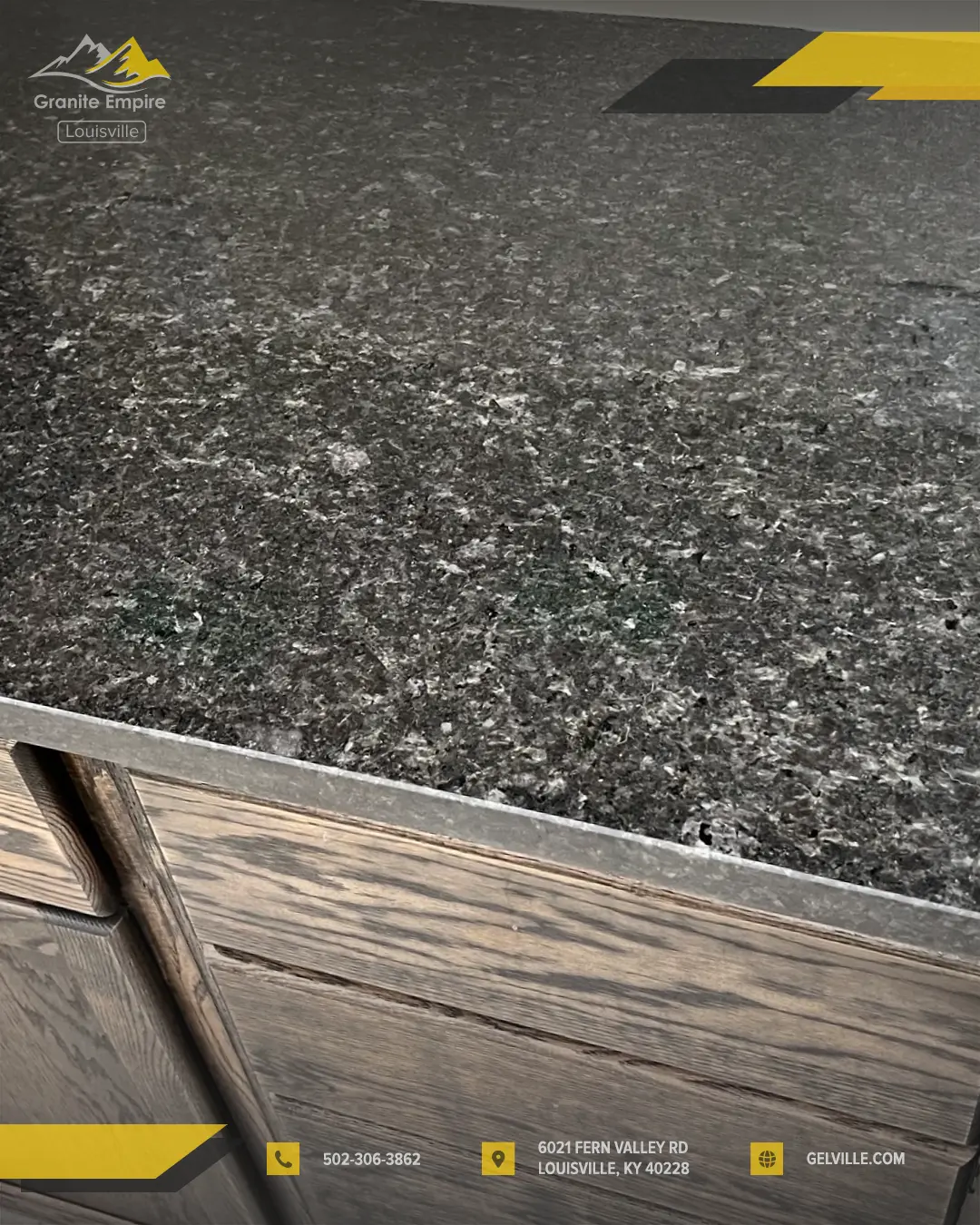
For most residential kitchens, 3 cm granite is a common choice because it provides a substantial appearance without requiring the same visual or structural treatment as a thinner slab. A 2 cm slab can also work well, but it may require a built-up edge or additional support depending on the design.
When homeowners compare granite companies in Fort Knox, KY, they often focus first on color and price. Thickness deserves the same attention because it can affect the edge profile, overhang requirements, cabinet support, sink area, and overall appearance of the finished countertop.
At Granite Empire of Louisville, we help homeowners look at the entire countertop rather than choosing a slab based on one specification. The right thickness depends on the kitchen layout, material, edge detail, and how the countertop will be used.
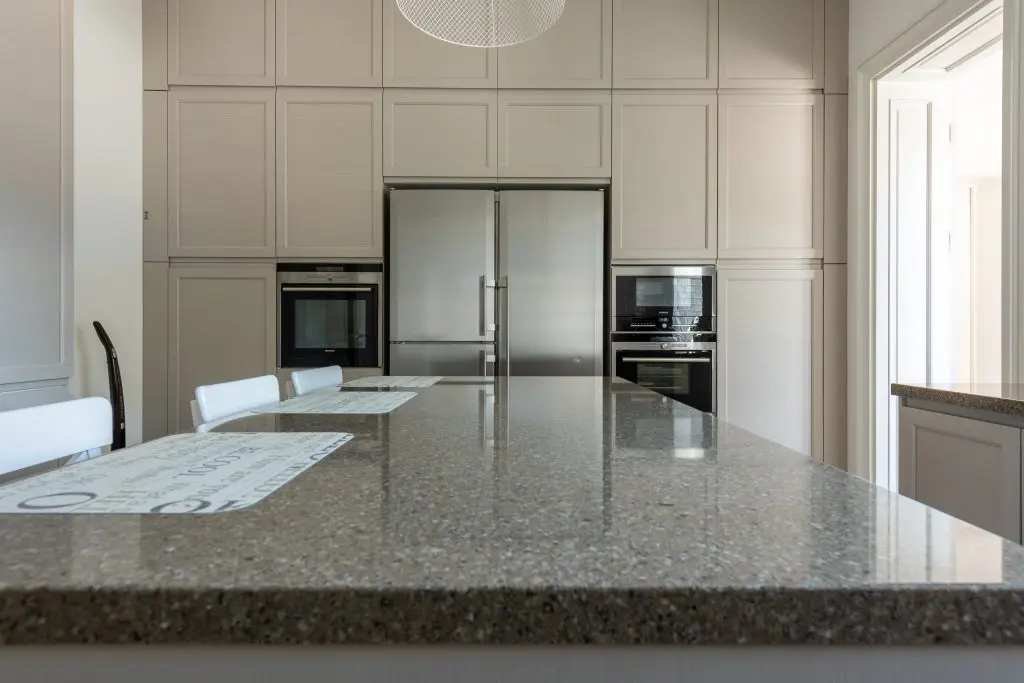
Is 3 cm Granite Better Than 2 cm Granite?
3 cm granite is often the simpler choice for a substantial countertop because the slab is thicker and can create a finished edge without the same need for a built-up edge. However, 2 cm granite is not automatically a lower-quality option.
The practical difference is thickness, not simply quality. A 2 cm slab can be fabricated successfully when the project is designed for it, but details around edges, seams, sinks, cooktops, and overhangs need to be considered during fabrication.
For homeowners speaking with granite companies in Fort Knox, KY, the useful question is not simply “Which thickness is better?” It is “Which thickness works best for my specific countertop design?”
What Is the Difference Between 2 cm and 3 cm Granite?
The main difference is that 3 cm granite is approximately 1 cm thicker than 2 cm granite, which affects the visual weight and fabrication details of the countertop.
| Feature | 2 cm Granite | 3 cm Granite |
|---|---|---|
| Thickness | Approximately 20 mm | Approximately 30 mm |
| Visual weight | Lighter | More substantial |
| Edge treatment | Often requires a built-up edge for certain looks | More flexibility with edge profiles |
| Support considerations | More dependent on design | Generally more straightforward |
| Typical use | Residential projects where the design supports it | Common choice for substantial kitchen surfaces |
These measurements describe the slab thickness itself. The finished edge can be thicker than the slab because fabricators can use additional material to create a built-up edge.
Does Granite Thickness Affect Durability?
Yes, thickness can affect how a countertop handles certain structural stresses, but slab thickness is only one part of durability. Granite is a hard natural stone, and the quality of fabrication, support, cutouts, overhangs, and installation all matter.
A thicker slab can provide additional material around areas that experience stress. However, even a thick granite countertop can crack if it is improperly supported or subjected to excessive force at a vulnerable location.
We pay particular attention to areas around sinks, cooktops, seams, corners, and unsupported overhangs because those details can matter more than thickness alone.
Does Granite Thickness Affect the Countertop Edge?
Yes, thickness has a direct effect on how the edge looks and how it is fabricated. A 3 cm slab can provide a naturally substantial edge, while a 2 cm slab may use a laminated or built-up edge when the homeowner wants a thicker visual profile.
Common edge options include:
- Eased edge
- Pencil edge
- Half bullnose
- Full bullnose
- Ogee
- Beveled edge
The best edge is not determined by thickness alone. We also consider the kitchen style, cabinet design, granite pattern, and how much visual detail the homeowner wants.
Does a Thicker Granite Countertop Need More Cabinet Support?
Not necessarily, but support requirements depend on the countertop design. The important factors include the size of the overhang, the location of supports, the cabinet configuration, and whether the countertop includes a large island or unsupported section.
Large islands deserve special attention. A homeowner may choose a thick slab but still need proper structural support underneath an extended overhang.
When homeowners talk with granite companies in Fort Knox, KY, we recommend discussing support before fabrication rather than waiting until installation day. That allows the cabinet and countertop plans to work together.
How Much Overhang Can Granite Have?
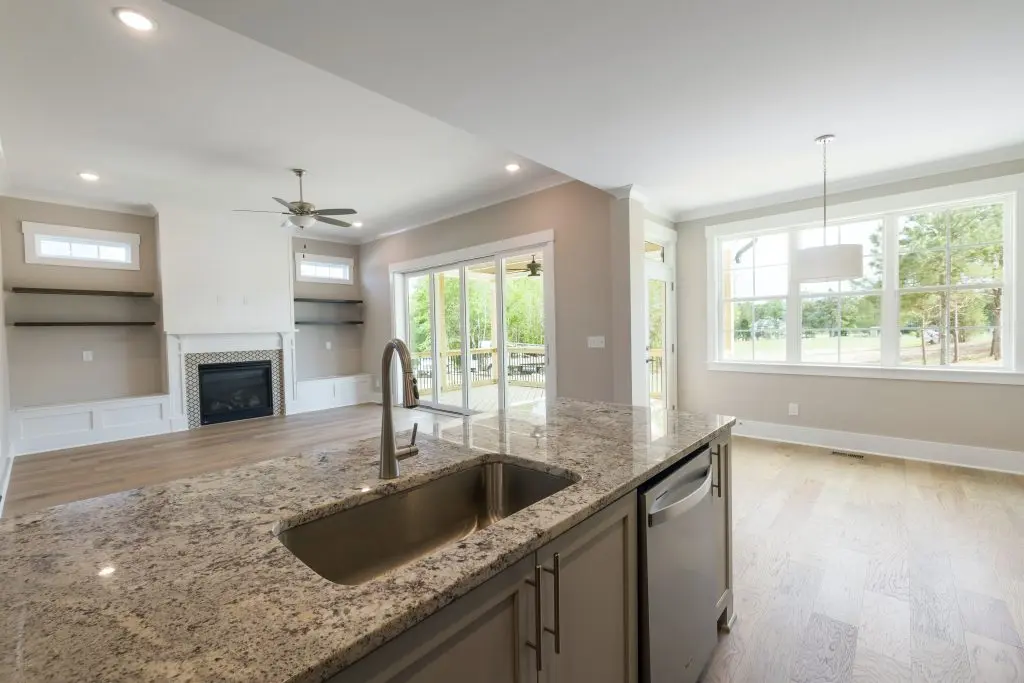
The allowable overhang depends on the slab thickness, stone properties, support system, cabinet layout, and the fabricator’s specifications. There is no single overhang measurement that is appropriate for every granite countertop.
For example, a small breakfast-bar overhang is a different structural situation from a large island designed for several stools. The larger the unsupported area, the more carefully the support system needs to be planned.
This is one reason countertop measurements should not be based only on cabinet dimensions. The finished design has to account for the actual stone and how it will be supported.
Does Thickness Affect Granite Countertop Price?
Yes, thickness can affect material and fabrication costs, but it should not be treated as the only factor that determines the final price. Slab selection, square footage, cutouts, edge profiles, seams, delivery, and installation can all affect the total.
Our current starting material prices are:
| Material | Starting Price |
|---|---|
| Granite | $39/sq. ft. |
| Quartz | $55/sq. ft. |
| Marble | $75/sq. ft. |
These are starting prices for the materials provided for this project. The final countertop price depends on the complete scope of fabrication and installation.
At Granite Empire of Louisville, we look at the entire project when discussing pricing rather than presenting the slab price as the complete installed cost.
How Does Granite Compare With Quartz and Marble?
Granite, quartz, and marble each have different performance characteristics, so thickness should be considered alongside the material itself.
| Material | General Durability | Heat Resistance | Stain Resistance | Maintenance |
|---|---|---|---|---|
| Granite | High | High | High when properly maintained | Periodic sealing may be needed |
| Quartz | High | Good, but heat protection is recommended | High | Simple routine cleaning |
| Marble | Moderate | High | More susceptible to staining and etching | More careful maintenance |
These are general material characteristics. The exact performance depends on the specific product, finish, installation, and maintenance routine.
For homeowners comparing granite companies in Fort Knox, KY, this broader comparison can be more useful than looking at thickness alone.
Does Granite Thickness Affect Heat Resistance?
Thickness does not make granite completely heat-proof, although granite generally has good resistance to normal kitchen heat. We still recommend using trivets or heat protection for very hot cookware because thermal shock can damage stone under certain conditions.
A thick countertop should not be treated as a surface where any hot object can be placed without consideration. Temperature changes, existing weaknesses, cutouts, seams, and the condition of the stone can all influence risk.
For everyday cooking, simple heat protection is an easy habit that helps preserve the countertop.
Does Granite Thickness Affect Maintenance?
Thickness itself does not significantly change the basic cleaning routine. Maintenance depends more on the granite’s porosity, finish, sealer, and how the surface is used.
| Maintenance Task | 2 cm Granite | 3 cm Granite |
|---|---|---|
| Daily cleaning | Similar | Similar |
| Spill cleanup | Prompt cleanup recommended | Prompt cleanup recommended |
| Sealing | Depends on stone | Depends on stone |
| Abrasive cleaners | Avoid | Avoid |
| Heat protection | Recommended | Recommended |
A thicker countertop is not automatically easier to maintain. The same care principles apply to both thicknesses.
What Happens During Granite Countertop Fabrication?
Fabrication turns the selected slab into a countertop designed for the exact kitchen. The process normally involves precise measurements, cutting, edge fabrication, sink and cooktop cutouts, and finishing before installation.
A typical project follows these steps:
- Select the granite slab.
- Measure the kitchen and confirm the layout.
- Plan seams, cutouts, and edge details.
- Fabricate the countertop.
- Finish and inspect the pieces.
- Deliver the finished countertop.
- Install and level the pieces.
We allow approximately 7-10 days for fabrication in a typical project after the template appointment, although the exact schedule depends on the material and project complexity.
Does a Granite Slab Need to Be Thicker for a Kitchen Island?
Not automatically. A kitchen island can use either 2 cm or 3 cm granite depending on the design, but large islands often require more attention to support and overhangs.
The island’s dimensions, seating arrangement, cabinet construction, sink or cooktop cutouts, and support system all affect the appropriate fabrication plan.
When working with granite companies in Fort Knox, KY, homeowners should ask specifically how the proposed thickness will work with the island design instead of selecting thickness based only on appearance.
What Thickness Should You Choose for a Bathroom Vanity?
Either 2 cm or 3 cm granite can work for a bathroom vanity, depending on the desired edge and design. Because bathroom countertops are often smaller than kitchen islands, the structural requirements may be different.
A 3 cm vanity can provide a substantial appearance with a relatively simple edge treatment. A 2 cm slab can create a lighter profile or be paired with a built-up edge if a thicker appearance is desired.
The choice should coordinate with the vanity cabinet, sink type, backsplash, and overall bathroom design.
Is 3 cm Granite Worth the Extra Cost?
It can be worth it when the thicker profile fits the design and the project benefits from its fabrication characteristics. However, we would not recommend choosing 3 cm simply because it sounds stronger.
The better decision comes from looking at:
- Countertop dimensions
- Island size
- Overhangs
- Edge profile
- Cabinet support
- Sink and cooktop cutouts
- Overall design
In some kitchens, 2 cm is perfectly appropriate. In others, 3 cm provides the appearance and fabrication approach the homeowner wants.
How Long Does Granite Countertop Installation Take?
A typical granite countertop project can take about 7-10 days for fabrication after the template appointment, followed by installation once the pieces are ready. The complete timeline can vary based on slab availability, fabrication requirements, and project complexity.
Installation generally involves positioning the fabricated pieces, checking alignment, securing the countertop, joining seams where required, and completing the sink and other planned details.
At Granite Empire of Louisville, we coordinate fabrication and installation so the final countertop matches the approved measurements and design.
FAQ
Is 2 cm or 3 cm granite better?
Both can work. 3 cm provides a thicker visual profile and can simplify some edge treatments, while 2 cm can be appropriate when the project is designed around a thinner slab.
Is 3 cm granite stronger than 2 cm granite?
A thicker slab has more material and can provide additional structural capacity, but support, fabrication, cutouts, and installation are also critical to countertop performance.
Does thicker granite cost more?
It can, depending on the slab and fabrication requirements. Thickness is only one factor in the final installed price.
Can 2 cm granite be used for a kitchen island?
Yes. The design must account for the island’s dimensions, overhangs, supports, cutouts, and edge treatment.
Does 3 cm granite need less maintenance?
No. Basic maintenance is generally similar. Sealing requirements depend on the specific granite rather than simply its thickness.
How long does granite fabrication take?
A typical fabrication period is approximately 7-10 days after the template appointment, depending on the material and project requirements.
What granite thickness is best for a bathroom vanity?
Both 2 cm and 3 cm can work. The choice depends on the desired edge profile, vanity design, sink configuration, and overall appearance.
Granite Countertops in Louisville, KY
Granite Empire of Louisville serves Louisville, KY and surrounding communities, including Fort Knox, KY, with granite, quartz, and marble countertop fabrication and installation. We help homeowners evaluate material, thickness, edge profiles, cutouts, support requirements, and the overall installation plan.
If you are comparing granite companies in Fort Knox, KY, we can help you understand how slab thickness fits into the rest of your countertop project. We provide fabrication and installation and can discuss the right approach for your kitchen or bathroom.