

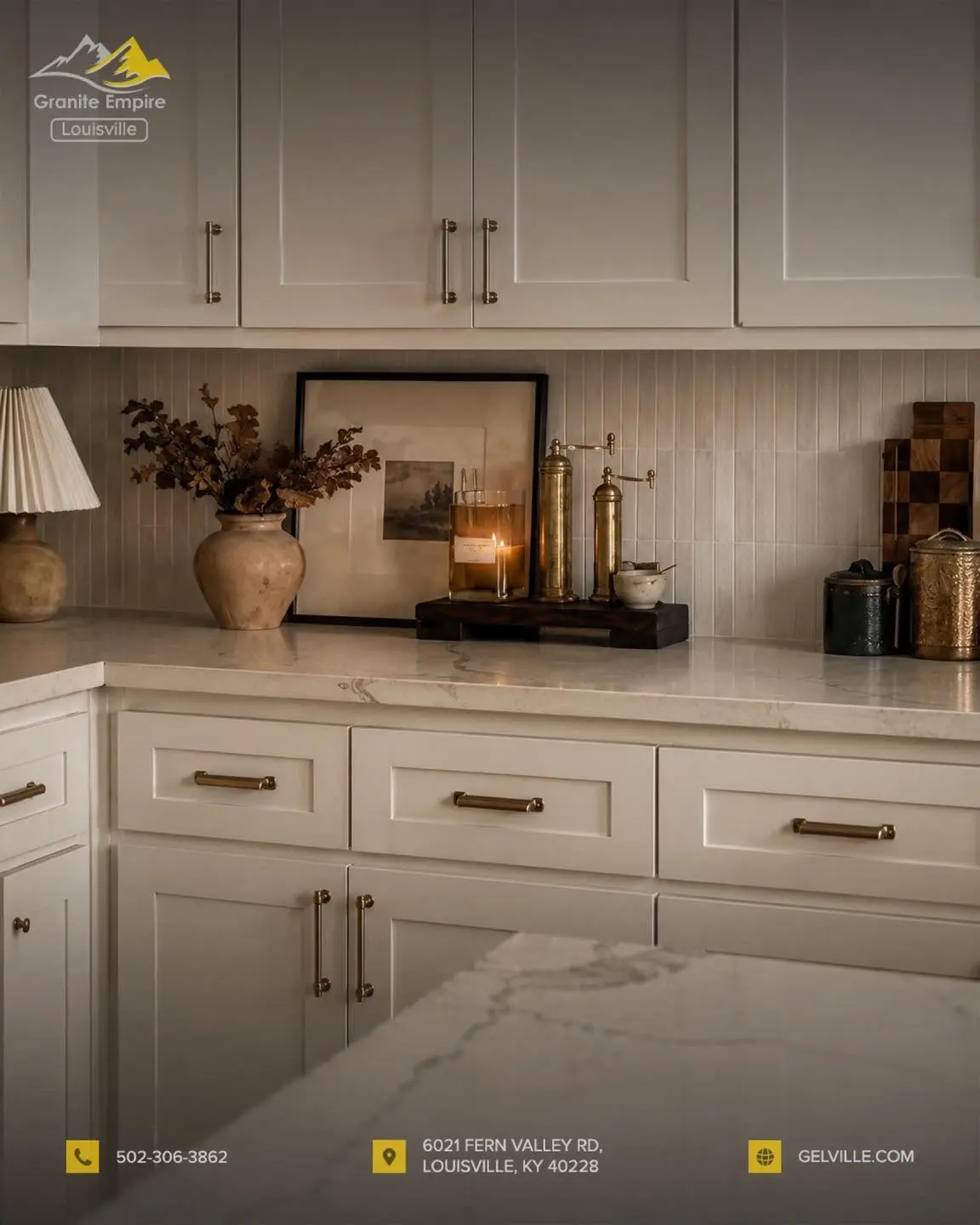
A countertop can separate from the wall when the cabinets move, the wall shifts, the caulk joint fails, or the original installation leaves too much stress between the countertop and surrounding surfaces. A small gap is often a finish issue, but a widening gap can point to movement underneath the countertop.
When homeowners shop for countertops in Fort Knox, KY, we recommend thinking about the support system as carefully as the surface itself. Granite, quartz, and marble are rigid materials, so they do not flex with cabinets and walls the way softer building materials can.
At Granite Empire of Louisville, we look at cabinet level, wall conditions, countertop support, seams, and the backsplash connection before installation. Those details help determine whether the finished countertop can remain stable over time.
Is a Small Gap Between the Countertop and Wall Normal?
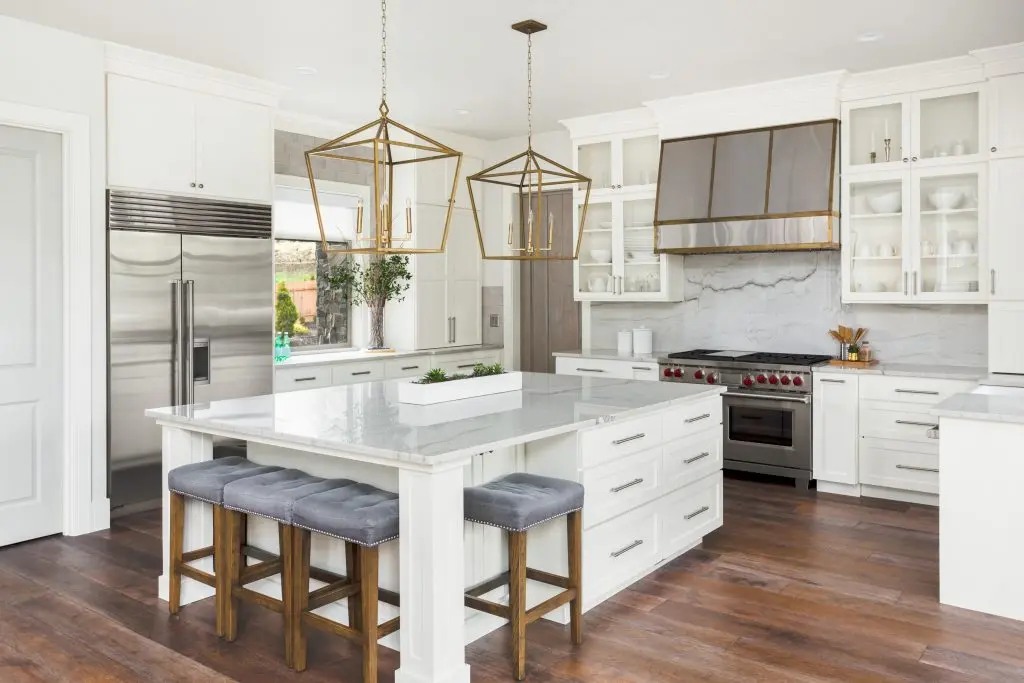
A very small joint can be normal because walls are rarely perfectly straight. Countertops are fabricated to fit the measured space, but slight wall irregularities are usually handled with an appropriate joint, caulk, or backsplash detail.
The concern is not simply that a joint exists. We pay more attention when a gap becomes noticeably larger, changes over time, or appears together with a cracked seam, loose backsplash, cabinet movement, or countertop sagging.
Can Cabinets Cause a Countertop to Pull Away From the Wall?
Yes. Cabinet movement is one of the most important causes to investigate because the countertop depends on the cabinets for stable, level support.
If cabinets settle, shift, loosen from the wall, or were not properly leveled before templating, the countertop can move with them. Even a small change may become visible where the countertop meets drywall, tile, or a backsplash.
For countertops in Fort Knox, KY, we recommend making sure the cabinet installation is complete before final countertop measurements are taken. Templating an unfinished or unstable cabinet layout can create fit problems later.
What Happens If Cabinets Are Not Level?
An out-of-level cabinet system can place uneven stress on a rigid countertop. Stone and engineered surfaces perform best when the supporting cabinets provide a flat, stable base.
Installers can address limited variations during installation, but the countertop should not be expected to correct major cabinet problems. If one cabinet settles after installation, the countertop may begin to show a gap, seam issue, or stress point.
We inspect the support conditions because a visible wall gap can sometimes be the symptom rather than the actual problem.
Can House Movement Create a Countertop Gap?
Yes. Seasonal movement, framing movement, and normal building settlement can change the relationship between walls, cabinets, and countertops.
Wood framing expands and contracts with environmental conditions. Drywall joints and trim can also move slightly. A rigid granite or quartz countertop reacts differently, so the change may become visible at the wall connection.
A stable, narrow caulk joint can accommodate limited movement. A rapidly growing opening should be evaluated instead of repeatedly covered with more caulk.
Can Failed Caulk Make the Countertop Look Like It Moved?
Yes. Sometimes the countertop has not moved significantly at all. The caulk or sealant has simply cracked, shrunk, or released from one surface.
This is usually a simpler issue than structural movement. We still look at the width and consistency of the gap before treating it as cosmetic.
If the same joint fails repeatedly, we check for movement between the countertop, cabinets, wall, and backsplash before applying another bead of sealant.
Can a Backsplash Hide an Uneven Wall?
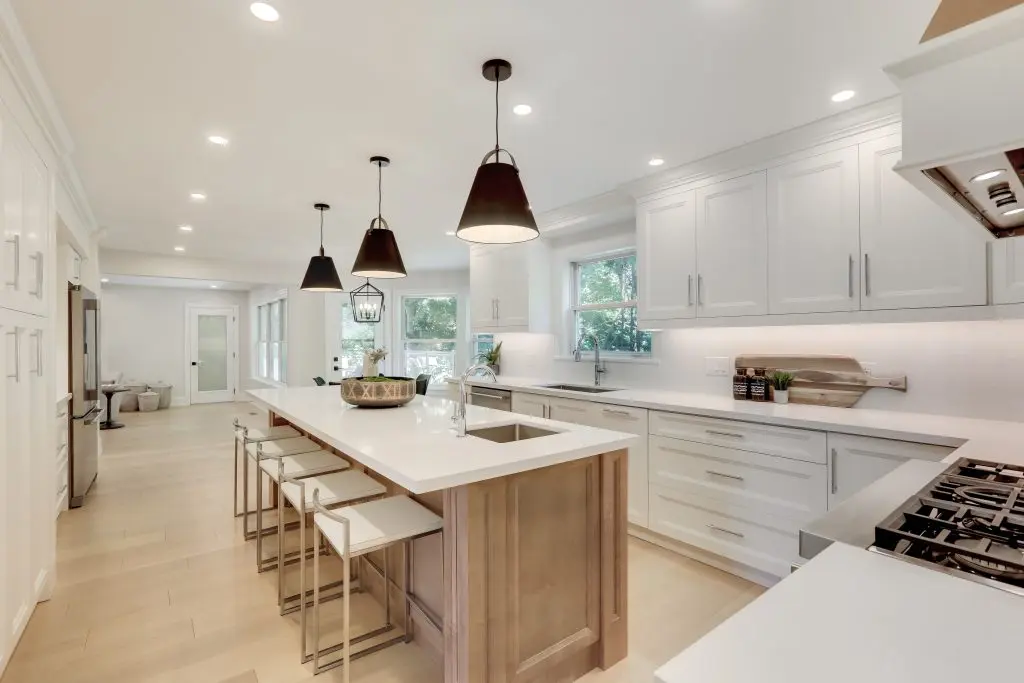
Yes, to a degree. A backsplash can visually cover small differences between a countertop edge and a wall that is not perfectly straight.
However, a backsplash should not be used to hide excessive movement or a major fabrication problem. If the countertop is pulling forward because the cabinets are moving, covering the gap does not correct the underlying cause.
At Granite Empire of Louisville, we consider wall conditions and backsplash plans during the countertop process so the finished transition can be planned rather than improvised.
Can Poor Templating Cause a Gap at the Wall?
Yes. Inaccurate measurements can leave a countertop too shallow, incorrectly shaped, or poorly matched to an irregular wall.
Modern templating can capture detailed dimensions, but the result still depends on the jobsite being ready. Cabinets should be installed, secured, and in their final positions before measurement.
This is one reason homeowners comparing countertops in Fort Knox, KY should ask when templating occurs. Measuring too early can create problems that only become obvious after fabrication.
Can Countertop Overhang or Weight Contribute to Movement?
It can. Large overhangs and heavy stone sections need appropriate support, especially on islands, peninsulas, and areas where cabinets do not support the full depth.
If a countertop is allowed to flex or sag, stress can develop at seams, cutouts, and wall connections. Granite, quartz, and marble all require support appropriate to the specific layout.
The solution is not simply choosing a thicker or more expensive material. Support design, cabinet construction, overhang depth, and cutout locations need to work together.
Do Granite, Quartz, and Marble React Differently?
Yes, but all three depend on stable installation. Granite and marble are natural stone, while quartz is an engineered surface containing mineral material and resin binders.
| Material | General Durability | Heat Resistance | Stain Resistance | Maintenance |
|---|---|---|---|---|
| Granite | High | High | Good with appropriate care | May need sealing depending on stone |
| Quartz | High | Moderate – heat protection recommended | High | Generally low maintenance |
| Marble | Moderate | High | More stain-sensitive | Requires more careful maintenance |
Material choice affects care and performance, but none of these countertops should be used to compensate for unstable cabinets or inadequate support.
Can Moisture Cause Countertop Separation?
Indirectly, yes. Moisture can damage cabinet boxes, subflooring, drywall, or wood framing, and that damage can allow the supported surfaces to move.
The sink base is one of the first places we check. A slow plumbing leak can swell cabinet material or weaken the support long before the homeowner notices water on the floor.
If a gap appears near a sink and the cabinet below shows swelling, staining, softness, or a musty odor, we recommend addressing the moisture source before focusing on the countertop joint.
Why Can a Gap Appear After a New Countertop Is Installed?
A new gap can appear because of movement after installation, an irregular wall, failed caulk, or a fit issue that was not apparent before the kitchen was finished.
New cabinets can also settle slightly after they are loaded with countertops, sinks, appliances, and household contents. Proper fastening and leveling reduce this risk, but we still evaluate the entire assembly if a visible change develops.
For countertops in Fort Knox, KY, the installation should be viewed as a system: cabinets support the surface, walls define the fit, and seams and cutouts influence how the slab handles stress.
When Is a Countertop Gap Just Cosmetic?
A small, stable gap with no other signs of movement is often cosmetic. It may only need the correct sealant or backsplash treatment.
We become more cautious when we see:
- A gap that keeps getting wider
- Cracked or reopening caulk
- A countertop that rocks or moves
- A seam that separates at the same time
- Cabinets pulling away from the wall
- Cracks near the sink or cooktop
- A sagging section near an appliance
Those signs suggest that the countertop should be inspected before the joint is simply resealed.
Can the Countertop Be Repaired Without Replacing It?
Often, yes. If the countertop itself remains sound, correcting the support or cabinet issue and resealing the wall joint may be enough.
Seam repair, localized adjustment, or support correction may also be possible depending on the installation. Replacement is more likely when there is extensive breakage, severe fabrication error, or a layout that cannot be corrected safely.
At Granite Empire of Louisville, we prefer to identify the reason for the separation first because replacing a countertop without correcting unstable cabinets can recreate the same problem.
How Much Do New Countertops Cost?
Our current starting material prices are $39 per square foot for granite, $55 per square foot for quartz, and $75 per square foot for marble. These are starting material prices, not universal installed totals.
| Material | Starting Material Price |
|---|---|
| Granite | $39/sq. ft. |
| Quartz | $55/sq. ft. |
| Marble | $75/sq. ft. |
Final pricing depends on square footage, material selection, edge details, cutouts, seams, fabrication, delivery, and installation requirements.
For homeowners comparing countertops in Fort Knox, KY, we recommend comparing complete project scope instead of judging a quote only by the starting material price.
How Long Does Countertop Fabrication Take?
Our typical fabrication period is about 7-10 days after templating when the selected material is available and the project is ready for production. Complex layouts, special edges, or unusual fabrication requirements can affect the schedule.
A typical project includes:
- Selecting the countertop material.
- Confirming that cabinets are installed and ready.
- Measuring or templating the layout.
- Planning seams, edges, and cutouts.
- Fabricating the countertop.
- Delivering and installing the finished pieces.
At Granite Empire of Louisville, we provide fabrication and installation for granite, quartz, marble, and other countertop options.
How Can You Prevent Countertop Separation?
The best prevention is a stable cabinet installation and accurate templating. The wall joint should then be finished in a way that can accommodate normal minor movement.
We recommend making sure:
- Cabinets are level and securely fastened
- Sink bases are protected from ongoing leaks
- Large overhangs have appropriate support
- Countertops are templated only after cabinets are final
- Wall and backsplash conditions are considered before fabrication
- New gaps are investigated if they continue to grow
Good installation starts below the countertop, not at the polished surface.
FAQ
Why is my countertop pulling away from the wall?
The cause may be cabinet movement, normal building movement, failed caulk, moisture damage, or an inaccurate fit. A growing gap should be inspected.
Can I just caulk a gap behind my countertop?
A small stable gap can often be resealed. If the gap continues to widen, the underlying movement should be identified first.
Can uneven cabinets cause countertop problems?
Yes. Uneven or moving cabinets can contribute to wall gaps, seam issues, stress, and cracking.
Does a countertop need to fit perfectly against the wall?
Walls are rarely perfectly straight, so a small finish joint can be normal. Excessive or changing gaps are different.
Can water damage make a countertop move?
Water can damage cabinets, walls, or subflooring and indirectly cause the countertop support to shift.
How long does countertop fabrication take?
Our typical fabrication period is about 7-10 days after templating, depending on material availability and project complexity.
Can a separated countertop be fixed without replacement?
Often, yes. The solution depends on whether the problem is failed sealant, cabinet movement, support, a seam issue, or fabrication.
Countertop Fabrication and Installation Near Fort Knox, KY
Granite Empire of Louisville serves Louisville, KY and surrounding communities, including Fort Knox, KY, with countertop fabrication and installation. We work with granite, quartz, marble, and other materials and coordinate templating, fabrication, cutouts, edge details, delivery, and installation.
If you are considering countertops in Fort Knox, KY, we can help evaluate the cabinet support, wall conditions, layout, and material before fabrication so the countertop is designed around the actual kitchen rather than idealized measurements. Planning those details early is one of the best ways to reduce future gaps, stress, and fit problems.