

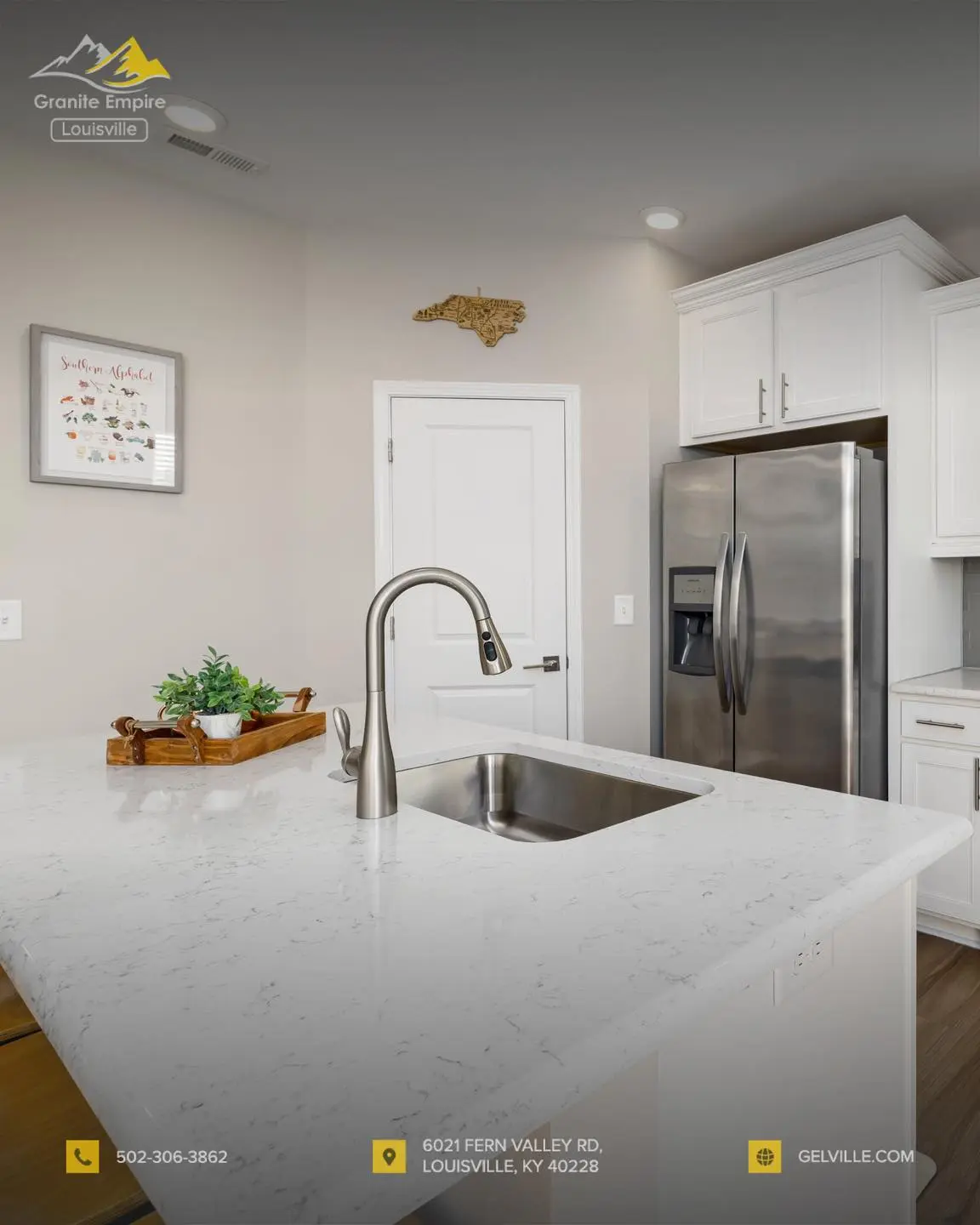
A countertop can look different after installation because lighting, viewing angle, surrounding finishes, slab orientation, and the scale of the material have all changed. With natural stone, variation across a full slab can also look much more noticeable once it becomes a large horizontal surface in your kitchen.
When homeowners compare countertop fabricators in Fort Knox, KY, we recommend looking beyond color alone. The way a slab is cut, positioned, joined, edged, and installed can influence the final appearance.
At Granite Empire of Louisville, we help homeowners understand these differences before fabrication whenever possible.
Why Does the Countertop Color Look Different in My Kitchen?
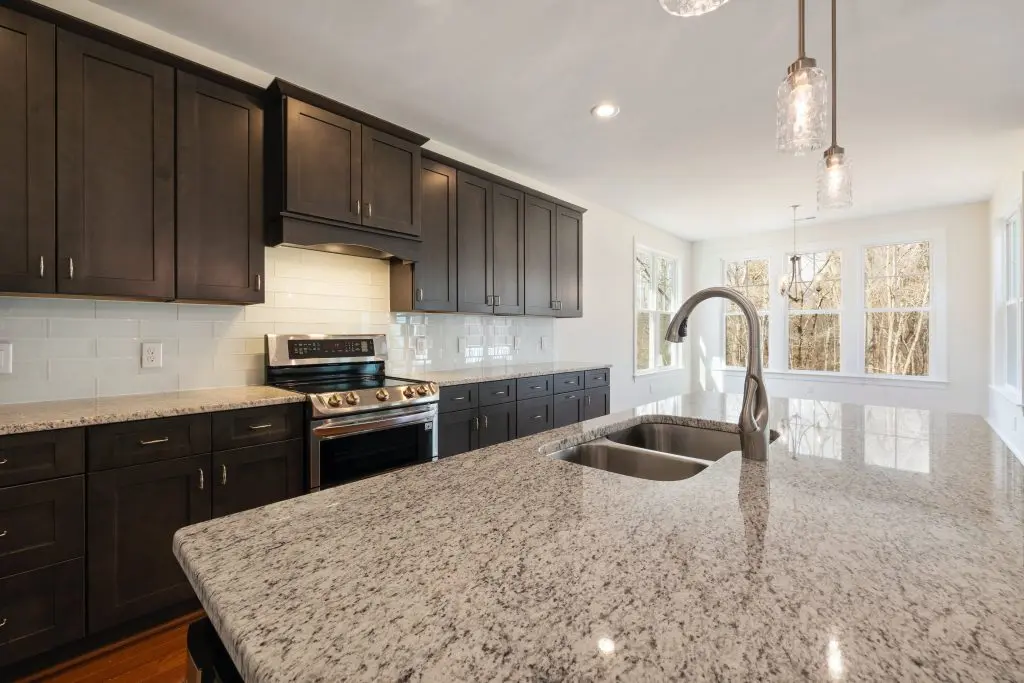
Lighting is one of the most common reasons a countertop appears different after installation. Showroom lighting, daylight, under-cabinet lights, warm LEDs, and cool LEDs can make the same surface appear warmer, cooler, lighter, or darker.
A granite slab with cream and gray minerals may look neutral in a showroom but warmer beside wood cabinets. White quartz may appear slightly grayer beside warm paint or backsplash tile.
We encourage homeowners to compare samples with their actual cabinet, flooring, and backsplash choices when possible. A countertop never exists in isolation once it is installed.
Can Natural Granite Look Different From the Sample?
Yes. A small granite sample cannot show every mineral, vein, color shift, or pattern change present across a full natural slab.
Granite is natural stone, so variation is expected. Even slabs sold under the same stone name can differ because they come from different sections of the stone.
For homeowners working with countertop fabricators in Fort Knox, KY, viewing the actual slab is especially useful when the granite has strong movement. The full slab gives a better idea of the final surface.
Why Does the Pattern Look Busier After Installation?
A pattern often looks busier because you are seeing much more material at once. A small sample may show a quiet section, while a large island can reveal broad veins, mineral clusters, and changes in direction.
This is why we consider the kitchen layout during fabrication planning. Which part of the slab becomes the island, sink run, or corner can change the visual effect.
Does Slab Orientation Change the Finished Look?
Yes. Rotating or repositioning a slab changes the direction in which veins and movement travel through the kitchen.
A vein that looked vertical while a slab was displayed upright may run horizontally across an island after fabrication. The stone did not change – the viewing orientation did.
At Granite Empire of Louisville, fabrication planning includes piece dimensions, cutouts, edges, and practical use of the slab. With strongly patterned stone, layout decisions also affect visual flow.
Why Can Seams Change the Appearance?
Seams can interrupt a pattern, especially in stone with strong directional movement. Two adjoining pieces may come from different areas of the slab or need to be oriented around the kitchen layout.
A seam cannot always make two sections look visually continuous. Its location depends on the material, slab dimensions, access, sink and cooktop cutouts, cabinet layout, and structural requirements.
For larger kitchens, seam planning before fabrication helps set realistic expectations.
Can Quartz Look Different After Installation Too?
Yes. Quartz is generally more consistent than natural stone, but lighting, pattern scale, surrounding colors, and manufacturing variation can still affect how it looks.
Some quartz designs use large-scale veining that is difficult to understand from a small sample. Once the material covers a full island, the pattern can look much more prominent.
When multiple slabs are required, slight differences between production lots may also matter. This is worth discussing before fabrication.
How Do Granite, Quartz, and Marble Compare?
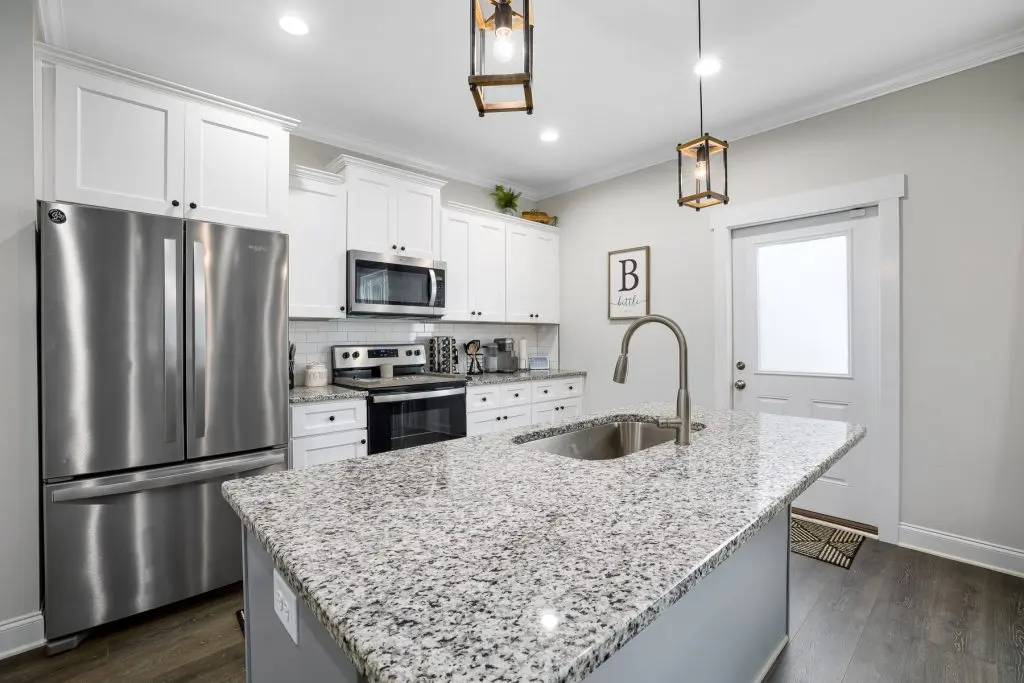
Granite and marble naturally vary more from slab to slab, while quartz is generally more predictable. However, all three can look different once installed because the room changes how we perceive the surface.
| Material | Pattern Consistency | Natural Variation | Heat Resistance | Maintenance |
|---|---|---|---|---|
| Granite | Moderate | High | High | May need sealing depending on stone |
| Quartz | High | Controlled | Moderate – use heat protection | Generally low maintenance |
| Marble | Moderate to low | High | High | More sensitive to staining and etching |
For countertop fabricators in Fort Knox, KY, understanding these material differences is part of helping homeowners know what to expect before installation.
Can Cabinets and Backsplash Change How the Countertop Looks?
Yes. Nearby finishes can change how the eye reads countertop color.
A warm white cabinet can make cool white quartz look grayer. Dark backsplash tile can make light granite look brighter. Wood cabinets can emphasize beige, brown, or gold minerals that were less obvious in the showroom.
We recommend evaluating countertop, cabinet, backsplash, and flooring samples together when the undertones are important to the design.
Why Does My Countertop Look Different at Night?
Artificial lighting changes color temperature and reflection. Warm bulbs tend to emphasize beige and gold tones, while cooler bulbs can emphasize gray, blue, or bright white tones.
Polished surfaces also reflect more light than honed or matte finishes. Under-cabinet lighting can create highlights that were not noticeable during slab selection.
If the color is important to you, view the material under both natural daylight and the lighting you plan to use at night.
Could the Finish Be the Reason?
Yes. Polished, honed, and textured finishes reflect light differently, which changes how color and pattern are perceived.
A polished finish usually looks richer and more reflective. A honed finish appears softer and more muted.
Dust, fingerprints, adhesive residue, or cleaning film after installation can also temporarily affect appearance.
What Differences Are Normal After Installation?
Natural variation, lighting changes, larger-scale pattern movement, and expected seams are generally normal. They do not automatically indicate poor fabrication or installation.
Common examples include:
- More visible veining than expected from a sample
- Natural mineral variation in granite or marble
- Color appearing warmer or cooler at home
- Pattern changes where separate pieces meet
- Different visual effects once cabinets and backsplash surround the surface
The key is whether the difference is inherent to the material or caused by an installation problem.
What Should Be Checked by the Fabricator?
Damage, unusual finish differences, poor alignment, excessive lippage at a seam, or problems that affect function should be inspected. These are different from normal stone variation.
For example, a natural vein in granite is not automatically a crack. A new fracture, damaged edge, unstable section, or noticeable installation issue deserves professional evaluation.
At Granite Empire of Louisville, we recommend asking the installation team when you are unsure whether a feature is natural or related to fabrication.
How Much Do Granite, Quartz, and Marble Countertops Cost?
Our current starting material prices are $39 per square foot for granite, $55 per square foot for quartz, and $75 per square foot for marble. Final project cost depends on material selection and the actual fabrication and installation scope.
| Material | Starting Material Price |
|---|---|
| Granite | $39/sq. ft. |
| Quartz | $55/sq. ft. |
| Marble | $75/sq. ft. |
Cutouts, edges, seams, dimensions, and other fabrication requirements can affect the final quote. We recommend comparing complete project scopes instead of treating the material price as the total installed price.
How Long Does Countertop Fabrication Take?
Our typical fabrication period is about 7-10 days after templating, assuming the selected material is available and the project is ready for production. Complex layouts or special fabrication details can affect scheduling.
The basic process includes:
- Confirming the material.
- Measuring or templating the cabinets.
- Planning seams, cutouts, and edges.
- Fabricating the countertop.
- Inspecting the pieces.
- Delivering and installing them.
Homeowners comparing countertop fabricators in Fort Knox, KY should ask when the fabrication timeline actually begins. Cabinet readiness, measuring, and material selection happen before fabrication itself.
How Can You Reduce Surprises Before Installation?
The best way is to evaluate the actual material and room conditions before fabrication. Photos and small samples are useful, but they cannot reproduce every characteristic of a full countertop.
We recommend:
- View the full slab when choosing natural stone
- Compare it with cabinet and backsplash samples
- Check the material under warm and cool lighting
- Discuss seam locations
- Confirm edge style and finish
- Ask how strong veining will be positioned
- Review sink and cooktop cutouts
At Granite Empire of Louisville, these conversations help connect the selected material to the actual kitchen rather than treating the countertop as a standalone product.
FAQ
Is it normal for granite to look different from the sample?
Yes. A small sample cannot show the full natural variation of a granite slab.
Why does my white quartz look gray after installation?
Lighting and nearby cabinet, wall, and backsplash colors can make white quartz appear warmer, cooler, or grayer.
Are visible seams normal?
Yes. Many countertop layouts require seams. Their location and visibility depend on slab size, layout, material, and fabrication needs.
Can two slabs of the same granite look different?
Yes. Natural granite varies, even when slabs are sold under the same stone name.
Can countertop color change after installation?
The material usually has not changed color, but lighting, orientation, reflections, and surrounding finishes can make it appear different.
How long does fabrication take?
Our typical fabrication period is about 7-10 days after templating, depending on material availability and project complexity.
When should I contact the installer?
Contact the installer if you see damage, unusual finish inconsistencies, alignment problems, or another concern beyond normal material variation.
Countertop Fabrication and Installation Near Fort Knox, KY
Granite Empire of Louisville provides countertop fabrication and installation from Louisville, KY for homeowners in surrounding communities, including Fort Knox, KY. We work with granite, quartz, marble, and other countertop materials and help homeowners plan slab selection, measurements, cutouts, edges, fabrication, and installation.
If you are comparing countertop fabricators in Fort Knox, KY, we can help you understand how your selected material is likely to look once it moves from a sample or slab into a finished kitchen. Choosing carefully, planning fabrication, and accounting for the room itself can make the final result much easier to predict.
For homeowners who want to compare countertop fabricators in Fort Knox, KY, reviewing the actual slab, finish, layout, lighting, and installation details before fabrication is one of the best ways to avoid unexpected visual differences.